Cairo with a toddler: what actually works
Why I stopped trying to see everything
We travelled to Cairo with our son when he had just turned two, and the honest answer to “can you do this with a toddler” is yes, but not the way we travelled before he existed. Cairo is not a stroller-friendly city in the way a European capital is. It is not dangerous for a child, but it is demanding: heat, distance, and pavements that were never designed with wheels in mind. Once I accepted that, the trip got much easier.
The single biggest adjustment was giving up on doing more than one real activity a day. Before we arrived I had a list that mixed Giza, the Egyptian Museum, Islamic Cairo and a felucca ride, all inside three days. We managed a fraction of it, and the trip was better for it. A three-day Cairo itinerary for families is a reasonable frame, but I’d still treat it as a starting point to cut down rather than a schedule to hit.
Heat: the thing I underestimated
We travelled in July, which in hindsight was our own fault. Summer in Cairo regularly pushes past 35°C by late morning, and a toddler overheats faster than an adult will admit to. What worked was starting early: at the Giza plateau, gates open before the heat builds, and being there close to opening meant our son was still cheerful when we packed up around 10:30am. By midday he was asleep in the car regardless of what else was on the plan, so we stopped fighting it and built naps into the schedule instead of around it.
If you can choose your dates, October to April is a genuinely easier window with a toddler — daytime temperatures sit closer to 20°C in winter, which changes what a morning outdoors feels like. If summer is your only option, plan for one outdoor activity before 10am and keep the rest of the day indoors or at the hotel pool.
Traffic and why we hired a driver
Cairo’s traffic is dense for most of the day, and journey times are the real planning variable here, not distance on a map. The trip from central Cairo to the pyramids can run 45 to 90 minutes depending on the hour, and that’s before you factor in a child who needs a bathroom stop or has fallen asleep mid-transfer and will wake up furious if the car jolts to a stop.
We used a private driver for every day trip rather than the metro or ride-hailing apps, and it was worth the extra cost. A private driver means you can leave when your child is ready, not when a schedule says so, and you’re not managing a car seat, a stroller, and a toddler through a crowded metro platform. For the pyramids specifically, we booked a private half-day at Giza with a stop at a Bedouin village for the kids to see camels up close, which gave us flexibility to leave the moment our son had had enough.
Where a stroller stops being useful
Giza itself is manageable with a stroller on the paved viewing areas, though the sand further out will slow you down. Islamic Cairo and Khan el-Khalili are a different story: narrow lanes, uneven stone, steps with no ramps, and crowds that don’t part for a pram. We ended up carrying our son through the bazaar in a baby carrier rather than pushing him, and I’d plan for that from the start rather than discovering it on the ground. A carrier also means you can move faster if he gets overtired, which happens without much warning at that age.
What worked as a calm, short activity
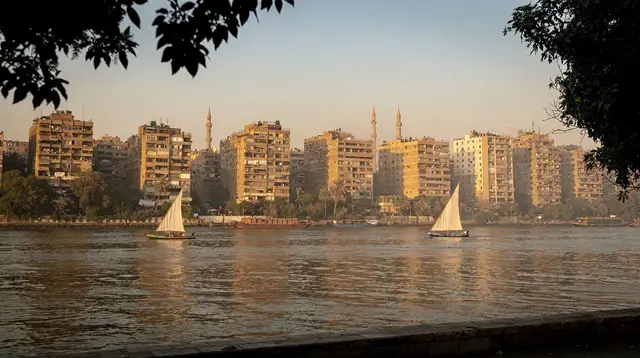
Not every outing needs to be a monument. The best afternoon we had was a short felucca ride on the Nile at sunset — low effort, no walking, a breeze off the water, and enough novelty (a boat! water!) to hold a toddler’s attention for the twenty or thirty minutes it lasted. It’s a good option for a day when you’ve already used your morning energy on something bigger, and it doesn’t ask anything of a small child beyond sitting still for a while, which a moving boat somehow makes easier than a restaurant table.
Museums are more of a gamble. We found the Egyptian Museum and NMEC manageable in short bursts — big open halls, air conditioning, and enough visual interest (statues, colour, scale) to hold attention for around an hour before the whining started. We booked a guided visit that combined both, a museum tour pairing the National Museum with the Egyptian Museum and a lunch stop built in, which meant we weren’t trying to plan the break ourselves mid-meltdown.
Practical basics that mattered daily
Water was non-negotiable: tap water isn’t something we’d give a toddler, so bottled water for drinking and even teeth-brushing became routine, and we carried far more of it than felt necessary. Food and water safety is worth reading before you go, mainly so you’re not improvising the rules on day one.
Mosques and churches expect modest dress and covered shoulders and knees, and that applies to a child accompanying you as much as to adults — we kept a light layer in the bag specifically for this, since toddlers in summer clothing rarely arrive dressed for it. Shoes come off at mosque entrances too, which is an extra few minutes of negotiation with a two-year-old who has opinions about socks.
For the pyramids entry itself, we skipped the ticket queue with a pre-booked QR code entry ticket — with a tired child in tow, not standing in a ticket line in the sun mattered more than it would have on a solo trip.
What I’d tell a friend before they go
Pack for heat and grit rather than for sightseeing: sun hats, a carrier over a stroller for the old city, more water than seems reasonable, and snacks that survive a hot bag. Accept that most days will have one real activity, not three. Giza with kids and family day trips from Cairo are both worth reading for the site-specific detail this page doesn’t cover, since this is really about how we structured the days, not what to see once you’re there.
Cairo with a toddler: frequently asked questions
Is Cairo safe for a toddler?
Safety concerns in Cairo are mostly about traffic and uneven ground rather than crime. Hold hands or use a carrier near roads, and expect pavements and old-city lanes to be an obstacle course rather than a hazard in themselves.
Do I need a stroller in Cairo?
A stroller works at Giza’s paved areas and in modern parts of the city, but it becomes a liability in Islamic Cairo and Khan el-Khalili’s narrow, uneven lanes. A baby carrier covers both situations.
How hot is Cairo for a young child?
June to August regularly passes 35°C by midday, which is hard on a toddler. Visit outdoor sites at opening time and plan indoor or hotel downtime for the afternoon; October to April is noticeably easier, with winter days closer to 20°C.
Should we use taxis or the metro with a toddler?
We used a private driver for every trip outside the hotel. It avoids car seat and stroller logistics on public transport and lets you leave the moment your child has had enough, which matters more with a toddler than the cost difference does.
Can toddlers visit mosques and churches in Cairo?
Yes, but the same modest dress rules apply to them as to adults — covered shoulders and knees, and shoes off at mosque entrances. Bring a light layer even in summer, since a child’s typical daytime clothing usually won’t meet the requirement on its own.
Is tap water safe for a toddler in Cairo?
No — bottled water is the standard advice for everyone in Egypt, and that includes drinking and brushing teeth for a young child. We carried more bottled water than felt necessary and were glad of it.
What’s a good low-effort activity for a tired toddler?
A short sunset felucca ride on the Nile worked well for us: minimal walking, a breeze off the water, and enough novelty to hold attention without asking much of a small child.
How many sights can we realistically fit in a day with a toddler?
Plan for one main activity per day, done early, with the afternoon left open for a nap or downtime. Trying to combine Giza, a museum, and the old city in one day is realistic for adults, not for a toddler’s schedule.
tours.Family
Verified deep-linked GetYourGuide tours. Book through these links and we earn a small commission at no cost to you.
GetYourGuide does not provide a product photo for this activity — the image shows the meeting point, photographed by us.