Cairo for solo female travellers
Is Cairo manageable for a solo female traveller?
Many women travel through Cairo alone, but the city rewards planning: a hotel base in Zamalek or Garden City, a private driver or a booked tour for day trips, and covered, modest clothing in the city and at religious sites. There is no statistic that makes the decision for you, only choices that reduce daily friction.
Planning a solo trip to Cairo
Cairo is a workable solo destination, but it is not a city where things simply fall into place. Distances are longer than they look on a map, traffic is dense for most of the day, and the informal economy around tourist sites — unofficial guides, camel touts, “helpful” strangers steering you toward a shop — is more persistent here than in many other cities. None of that makes solo travel here unreasonable. It means the trip goes more smoothly when a few practical decisions are made before you land, rather than worked out on the ground.
This page focuses on logistics rather than rules: where to base yourself, how to move around, how to book day trips without negotiating alone in the street, and what habits reduce daily friction. For the specifics of what to wear inside a mosque, see the dedicated mosque etiquette guide; for a general wardrobe rundown, see what to wear in Cairo. Here the question is simpler: how do you actually organise a few days or a week in Cairo on your own.
Choosing where to stay
Where you sleep shapes how much of the day goes smoothly. Zamalek, an island neighbourhood on the Nile, and Garden City, just south of central Cairo, are the two areas most solo travellers gravitate to. Both are walkable in daylight, have a concentration of cafes, restaurants and mid-range to upscale hotels, and put you within a short car ride of Islamic Cairo, Coptic Cairo and the Egyptian Museum. Evenings are easier here too: you can walk to dinner rather than needing a car for every outing.
A hotel in Giza facing the pyramids is the other common choice, and it has a real advantage if pyramid views and an early, unhurried visit to the plateau are the priority. The trade-off is distance from central Cairo’s restaurant and shopping scene — getting back into town for an evening out means a 45–90 minute drive each way depending on traffic, not a walk. For a longer stay, some travellers split the two: a few nights in Zamalek or Garden City, then a night or two near Giza before an early pyramids visit.
A full comparison of neighbourhoods and price ranges is in where to stay in Cairo.
Getting around without guessing
Cairo’s traffic is heavy for most of the day, and the city was not built with pedestrians as the priority, so how you move around matters more here than in a lot of other capitals.
Private driver. For day trips out of Cairo or Giza — Saqqara, Dahshur, Alexandria, Ain Sokhna — a private driver arranged through your hotel or a booked tour is the standard choice, and it solves several problems at once. You are not negotiating a fare, you are not trying to flag down transport in an unfamiliar area, and the driver already knows the route through the day’s traffic. It costs more than public transport, but for a solo traveller it removes a layer of uncertainty that is harder to manage alone than in a pair or group.
Uber and Careem. For shorter trips within the city — a restaurant, a museum, back to the hotel at night — Uber and Careem are widely used and give you the fare and driver details before you get in, which some travellers find more reassuring than hailing a taxi on the street. Both apps work well in Cairo and are a reasonable default for anything under about 30 minutes.
The metro. Cairo’s metro has three lines and is heavily used by commuters. It includes designated women-only carriages, usually near the front of the train, and it is a practical way to cover a direct route without traffic. It gets crowded at rush hour, and station signage leans on Arabic more than English in places, so it suits travellers who want to save money on short, well-understood routes rather than a first choice for every trip. Full detail is in the Cairo metro guide and the Uber and Careem guide.
Walking. Zamalek’s corniche and the main streets of Garden City are reasonably walkable during the day. Longer stretches, badly lit streets, and anything after dark are better covered by car. Realistic travel times across the city are worth reading before you plan a day with more than two or three stops, since Cairo’s traffic makes back-to-back sightseeing harder than the map distance suggests.
If you are unsure how you will get from the airport to your hotel on arrival, read the Cairo airport arrival guide and airport transfers guide before you land — arranging this in advance means you are not working it out, alone, at 11pm in an unfamiliar arrivals hall.
Booking activities as a solo traveller
Solo bookings on GetYourGuide and Viator are routine — you are not an unusual case, and pricing does not change because you are booking for one. The advantage for a solo traveller specifically is that the pickup point, timing and price are all confirmed before you leave the hotel, which removes one more thing to negotiate on the ground.
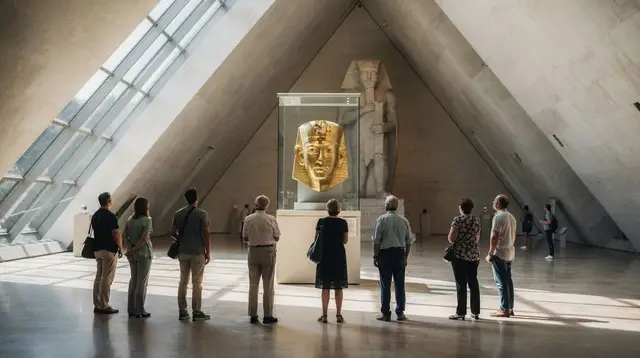
Some operators in Cairo run tours aimed specifically at women travelling without a group. A private, female-guided visit to the Egyptian Museum is one option if a woman-led, one-on-one format matters to you more than the museum content itself, which is otherwise covered in the standard museum tours.
For evenings, an organised outing solves the “where do I go alone after dark” question without much extra planning. A Cairo by night tour covers illuminated landmarks with transport included, so you are not arranging a car yourself for an after-dark outing. A guided food tour through Cairo’s neighbourhoods is a similarly low-friction way to eat well without picking restaurants blind or eating alone at a table for one, if that is not how you want to spend the evening.
If you are short on time and want the sightseeing pressure taken off your own planning entirely, a short multi-day package bundles transport, guiding and pacing into one booking — useful for a first visit where you would rather not build the itinerary yourself. The comparison between arranging things yourself and booking through a group or private tour is covered in private vs group tours in Cairo.
What to wear, briefly
Loose clothing that covers the shoulders and reaches at least the knee works better in Cairo generally, not only inside mosques — it draws less attention on the street and suits the climate better than tight, synthetic fabrics, especially outside the cooler October–April season. This is not a rule enforced anywhere outside religious sites, but it is what reduces the number of comments and stares reported by solo travellers. The mosque etiquette guide covers headscarves and specific dress requirements for religious sites; the wardrobe guide covers the fuller picture, including fabric and footwear for walking on uneven ground at sites like Giza and Saqqara.
Money, cards and staying reachable
Egypt runs on the Egyptian pound (EGP, written LE or E£), not the dollar or the euro, even when some tour listings display a price in a foreign currency for reference. Carry cash for small purchases, taxis outside the ride-hailing apps, and baksheesh — a customary tip expected in many everyday interactions, from a museum attendant to a hotel porter. Cards are accepted at hotels, malls and most sit-down restaurants, but a cash reserve avoids being stuck at a stall or a small cafe that only takes notes. Details on ATMs, typical baksheesh amounts and card acceptance are in money, cards and ATMs in Cairo and baksheesh and tipping in Egypt.
A local SIM or an international roaming plan that works reliably is worth arranging on arrival rather than relying on hotel wifi alone — having maps and a ride-hailing app working at all times matters more travelling alone than in a group, where someone else can usually navigate.
Avoiding the common frictions
Cairo’s tourist sites, particularly the Giza plateau and Khan el-Khalili, draw unofficial guides, camel and horse handlers, and vendors who approach directly and can be persistent. None of this is unique to solo women, but navigating it alone, without someone else to share the decision with, is more tiring. A few habits help:
- Book camel or horse rides, if you want one, through your tour or hotel rather than accepting an offer made directly at the plateau — the price and safety standard are unclear when it is arranged on the spot.
- Decline firmly and keep walking rather than engaging at length; a long negotiation, even a polite one, tends to invite more of the same.
- Agree transport prices before getting in a taxi that is not from Uber or Careem, or use the apps instead, where the fare is fixed in advance.
- Keep a screenshot of your hotel address in Arabic, useful for any driver who does not read the English transliteration easily.
A longer rundown of the specific scams reported around Cairo’s main sites is in Cairo tourist scams to avoid, and a broader read on how the city compares to other destinations is in is Cairo safe for tourists.
A realistic day, solo
A workable structure for a solo day looks like this: breakfast at or near the hotel, a pre-booked activity or private driver picking you up on a fixed schedule rather than a walk-in plan assembled on the spot, lunch somewhere recommended by the hotel or already researched rather than chosen under pressure from a street vendor, and a car booked for the return after dark. This is not more cautious than necessary — it is simply removing decisions from moments when you are tired, in traffic, or being approached by someone selling something. The same day travelling with a companion allows more improvisation because there are two people to weigh a decision; alone, a plan fixed in advance does more of that work for you.
Documents and entry
Most visitors need a visa: either an e-Visa arranged in advance through the official visa2egypt.gov.eg portal, or a visa on arrival at Cairo airport for eligible nationalities. Passports should be valid for at least six months from your travel date. Visa fees change, so check the official portal rather than relying on a fixed number quoted anywhere else, including this page. Full detail is in Egypt visa and entry rules.
Solo trip snapshot
| Decision | What most solo travellers choose |
|---|---|
| Base | Zamalek or Garden City for a central stay; Giza for pyramid-view mornings |
| Day trips (Saqqara, Alexandria, Ain Sokhna) | Private driver or a booked tour |
| Short in-city trips | Uber or Careem |
| Direct, well-known routes | Cairo metro, women-only carriage |
| Evenings out | A booked activity or a car both ways, rather than walking unfamiliar streets after dark |
| Camel or horse rides at Giza | Booked in advance, not accepted on the plateau |
None of this removes every uncertainty of travelling alone in an unfamiliar city, and no page can promise that. What it does is put the decisions that cause the most friction — transport, timing, who is picking you up and where — in place before you need them, which is what most solo travellers in Cairo say made the difference.
Solo travel in Cairo: questions and answers
Is it safe to walk around central Cairo alone?
Central areas like Zamalek, Garden City and the main tourist streets around Tahrir see steady foot traffic during the day. Many solo travellers walk short distances in daylight without issue, though the informal attention that comes with being a visible foreigner is common and worth expecting rather than being surprised by. After dark, a taxi, Uber or Careem for even a short trip removes the guesswork.
Should I book a private driver or use Uber and Careem?
A private driver is the norm for day trips out of Cairo or Giza because it removes the need to negotiate fares or navigate unfamiliar routes through dense traffic. Uber and Careem work well for shorter, in-city trips and let you see the fare and driver details in advance, which some solo travellers find reassuring.
Is the Cairo metro safe for a woman travelling alone?
The Cairo metro has three lines and includes women-only carriages, usually marked and positioned at the front of the train. It is heavily used by local commuters and is a reasonable option for direct routes, though it gets crowded at peak hours.
What should I wear as a solo woman in Cairo?
Loose, covering clothing that reaches the knees and covers the shoulders works well in the city generally, not only inside mosques. It draws less attention than shorts or sleeveless tops and suits Cairo’s climate better than tight synthetic fabrics. A separate guide on this site covers wardrobe specifics in more detail.
Where should I stay as a solo traveller?
Zamalek and Garden City are central, walkable neighbourhoods with a concentration of hotels, cafes and restaurants, which makes evenings out simpler. A Giza hotel facing the pyramids suits a shorter stay focused on the plateau but puts you further from central Cairo’s restaurants and nightlife.
Can I book pyramid tours and museum visits alone, or do I need a group?
Solo bookings are routine on GetYourGuide and Viator, and several Cairo operators run guided options aimed specifically at women travelling without a group. Booking ahead through an established partner also means the price and pickup details are confirmed before you leave the hotel.
How do I avoid overpaying or getting pulled into unwanted attention at sites like the pyramids?
Unofficial guides and camel handlers approach visitors directly at the Giza plateau and elsewhere, often quoting inflated prices or pressuring a booking on the spot. Arranging tickets and any camel or horse activity through a booked tour or your hotel in advance avoids this entirely, since you already know what you are paying for and with whom.
Is it normal to feel stared at or approached in Cairo?
Solo women, especially foreign visitors, commonly report being looked at or spoken to more than they would expect at home. It rarely escalates beyond comments, and a firm, brief response or simply continuing to walk is the usual approach locals and repeat visitors describe. Choosing well-lit, populated routes and a car for late trips reduces how often it comes up.
Cairo trip planning and itinerary tours on GetYourGuide
Verified deep-linked GetYourGuide tours. Book through these links and we earn a small commission at no cost to you.
GetYourGuide does not provide a product photo for this activity — the image shows the meeting point, photographed by us.