Zamalek and the Nile corniche on foot
Can you walk Zamalek and the Nile corniche without a driver or guide?
Yes. Zamalek is a walkable island with tree-lined streets, and the Nile corniche runs alongside it, so this is one of the few things to do in Cairo that needs no private driver, no guide and no entry ticket. Most visitors combine it with a sunset felucca ride from one of the riverside docks.
A different kind of Cairo day
Most of what fills a Cairo itinerary asks something of you: a driver for Giza, a queue at a mosque, a round of bargaining at Khan el-Khalili. Zamalek and the Nile corniche ask nothing. The island sits in the middle of the Nile, connected to the mainland by a handful of bridges, and its streets are shaded, mostly flat and easy to read on a map. There is no ticket booth, no fixed route and no negotiation. You start walking and stop when you feel like it.
This page treats Zamalek and the corniche as one thing: a residential, tree-lined stretch of the city that rewards slow walking rather than checklist sightseeing, capped, if you want, by a felucca on the river at the end of the day. It is not a monument circuit and it does not try to be one. If you want the density of history that Islamic Cairo or Coptic Cairo delivers, those areas are the right choice and this walk is not a replacement for either. What this page covers does not repeat elsewhere on the site: the bazaar experience belongs to Khan el-Khalili, private-guide logistics belong to their own page, and this is the only page built around Zamalek and the corniche as a calm, self-directed break.
Why this fits between site days
A trip built around Giza, Saqqara and the museums of the city is, honestly, tiring. Sites open early, driving between them eats time in traffic, and the heat outside the winter months makes afternoons hard work. Zamalek and the corniche work as a deliberate change of pace: an afternoon or evening with no admission fee, no scheduled pickup and no obligation to keep moving toward anything in particular. It suits a trip of three days or more in Cairo, slotted in after a heavier morning at the pyramids or museums, rather than as a headline activity of its own. On a one-day visit to Cairo it is usually the first thing to cut; on a two-day stay it earns its place as an evening closer, especially paired with a felucca.
Getting to Zamalek
Zamalek sits between the Nile’s two branches, roughly opposite the city centre and Garden City. A taxi, Uber or Careem from downtown takes about 15 to 20 minutes outside peak traffic, longer during the evening rush that grips most of Cairo. The Cairo Metro’s Line 2 stops at Zamalek station on the island’s southern end, which is the simplest way in if you are starting from a metro-connected part of the city. However you arrive, once you are on the island the point is to leave the vehicle behind and walk.
Walking Zamalek
The island’s grain is quieter and greener than almost anywhere else in central Cairo. Streets such as 26th of July Street and Brazil Street carry the main flow of shops, cafes and a scattering of art galleries, while the smaller residential lanes behind them are lined with older apartment buildings, some from the early twentieth century, with balconies and ironwork that reward a slow pace rather than a fast one. There is no single sight to aim for here; the walk is the activity. Expect bookshops, small design stores, a handful of independent cafes with outdoor seating, and the general rhythm of a neighbourhood that residents actually live in, as opposed to a district built around visitors.
Zamalek is also home to the Cairo Opera House and the Gezira grounds, both worth a glance if you are cutting through the island’s centre, and to a cluster of foreign embassies that give parts of the street grid a leafier, more guarded feel. None of this needs a plan. Pick a direction, follow the shade, and let the walk run as long as you have patience for.
The Nile corniche
The corniche is the paved path and roadway that runs along the river’s edge, on both the Zamalek side and the mainland side toward Garden City and downtown. Walking a stretch of it, ideally as the light starts to soften in late afternoon, is the natural way to connect a Zamalek stroll to the river itself. The path gets busier with local families, joggers and vendors selling tea or roasted corn as the evening comes on, which is part of the appeal rather than a drawback. Traffic noise from the roadway is a constant here, since the corniche doubles as one of the city’s main arteries, so this is not a silent riverside walk, but it is a genuine slice of everyday Cairo life rather than a staged one.
Where the felucca fits in
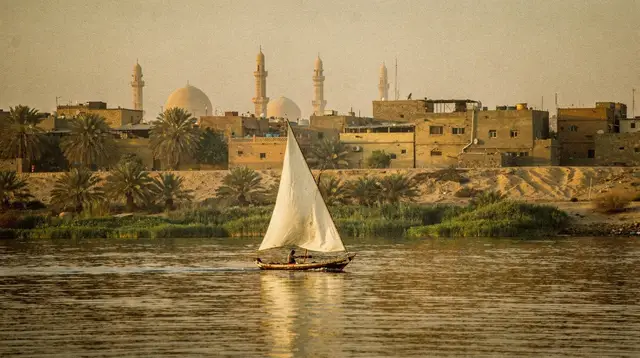
The obvious way to close a Zamalek and corniche afternoon is on the water. Traditional feluccas, the Nile’s lateen-sailed wooden boats, launch from several docks along the Zamalek and Garden City corniche, and an hour or so on one at sunset is a low-key, unhurried way to end the day. For a straightforward, no-frills sail, a felucca cruise along the Nile covers the basics without a fixed itinerary beyond the ride itself. If you would rather have lunch on board earlier in the day, a private felucca outing with lunch included turns the same idea into a longer, more structured booking. For something with more production behind it, larger boats run a sunset dinner cruise with a show, which trades the quiet of a small sailboat for music, a set menu and a fixed departure time.
None of this requires advance planning beyond picking a dock and a departure window. Feluccas without a fixed schedule are typically negotiated on the spot at the dock, while the larger dinner cruises and pre-booked felucca options run to set times, which matters if you are working around dinner reservations elsewhere in the city.
What this walk is not
It is worth being direct about what Zamalek and the corniche do not offer, since Cairo’s other neighbourhoods cover that ground already. This is not a bazaar: there are shops, but no haggling culture like Khan el-Khalili’s, and nothing here substitutes for that experience if bargaining and market stalls are what you are after. It is not a historical monument circuit: Zamalek’s interest is architectural and atmospheric rather than built around named sites with entry tickets, unlike Islamic Cairo’s mosques or Coptic Cairo’s churches. And it is not an activity that needs a private driver or a guide booked in advance, unlike day trips out to Saqqara or Alexandria. Treat it as a pressure valve between busier days, not as a headline stop competing with the pyramids or the Grand Egyptian Museum for your time.
A simple plan for the afternoon
| Time | What | Notes |
|---|---|---|
| Mid-to-late afternoon | Arrive in Zamalek by metro, taxi or ride-hail | Line 2 stops on the island’s south end |
| 1–2 hours | Walk the main streets and side lanes | No fixed route; follow shade and interest |
| Late afternoon | Walk a stretch of the corniche toward the river | Busier and livelier as evening approaches |
| Sunset | Felucca or dinner cruise from a corniche dock | Book ahead for larger dinner boats, walk up for a plain felucca |
| Evening | Dinner in Zamalek or back downtown | Zamalek has its own cluster of restaurants and cafes |
Durations here are approximate and depend entirely on your own pace; there is nothing timed about this walk beyond a booked cruise departure, if you choose one.
Practical notes
Zamalek is flat and shaded compared with much of central Cairo, but pavements can still be uneven, so normal walking shoes matter more than the terrain suggests. Cafes and restaurants across the island accept cards, in line with most of Cairo’s hotels and mid-range restaurants, though carrying cash in Egyptian pounds is still worth it for tea stalls, street vendors along the corniche and tipping, since baksheesh is a routine part of daily transactions across the city. Water sold on the street should be bottled and sealed, as with the rest of Cairo; tap water is not something to drink here.
Heat governs the comfort of this walk more than anything else. Between June and August, afternoon temperatures regularly pass 35 degrees Celsius, which makes a midday Zamalek walk genuinely uncomfortable; shifting the whole outing later, closer to sunset, works better in summer. From October to April, daytime temperatures are milder and the walk is comfortable at almost any hour, though evenings can turn cool enough for a light layer, particularly in the winter months. Friday is Cairo’s weekly day of rest, which can mean quieter streets in Zamalek and shifted opening hours at some cafes; hours also change during Ramadan, when many places open later in the day and stay busy well into the night.
Zamalek and the Nile corniche: practical questions
Do you need a guide or driver to walk Zamalek?
No. Zamalek’s streets form a manageable grid on a flat island, and the corniche path runs along the Nile at its edge, so this is a self-guided walk rather than a booked excursion.
How long does the walk take?
Two to three hours covers the main streets and a stretch of corniche at an unhurried pace, longer if you stop for coffee or add a felucca ride at the end.
Is Zamalek the same kind of visit as Khan el-Khalili?
No. Zamalek is residential and quiet, with cafes and galleries rather than stalls, and there is no bargaining involved, unlike the bazaar at Khan el-Khalili.
What is the best time of day to go?
Late afternoon into early evening works best, since the heat eases and the walk can end with a felucca or dinner cruise on the Nile at sunset.
Is this walk a substitute for visiting Islamic Cairo or Coptic Cairo?
No. Those areas cover centuries of monuments and take dedicated time to see properly; Zamalek and the corniche are a lower-key break between site visits, not a historical circuit.
Can you combine the walk with a felucca ride?
Yes, and it is the most common way to close the day. Several docks along the Zamalek and Garden City corniche launch traditional feluccas and larger dinner boats in the late afternoon and evening.
Is Zamalek safe to walk in the evening?
Zamalek is one of Cairo’s calmer residential districts, well lit along its main streets, and it is a common choice for an evening walk, though the usual city-wide caution about traffic and unlit side streets still applies.
Planning the rest of the day around it
If Zamalek and the corniche are your afternoon, the morning is better spent on something with a fixed schedule, since this walk has none of its own. Pairing it with an earlier visit to a major site keeps the day structured without making the Zamalek portion feel rushed; see how many days to budget for Cairo overall if you are still shaping the itinerary, and where to stay in Cairo if a Zamalek base of your own would put this walk on your doorstep rather than at the end of a taxi ride.
For a first visit to the city more broadly, the guide for first-time Cairo visitors covers how a day like this one fits against the rest of the must-see list. And if the felucca becomes the highlight, the fuller comparison of felucca sailing against dinner cruises and the dedicated felucca and dinner cruise guide go further into choosing between a plain sailboat and a larger dinner boat, and the broader sunset felucca piece covers what the ride itself actually feels like once you are on the water.
For an evening that continues past the river, a wider look at what Cairo offers after dark is available through a Cairo by night tour, which picks up roughly where a Zamalek sunset leaves off, moving on to other lit-up parts of the city after the corniche walk winds down.
Downtown Cairo and Zamalek city tours on GetYourGuide
Verified deep-linked GetYourGuide tours. Book through these links and we earn a small commission at no cost to you.
GetYourGuide does not provide a product photo for this activity — the image shows the meeting point, photographed by us.