Three days in Cairo: Giza, Saqqara and the old quarters
Why three days works
Two days gets you Giza and one of the old quarters, but it skips Saqqara entirely and rushes Islamic or Coptic Cairo into an afternoon. Three days fixes both problems without leaving the Cairo-Giza-Saqqara area: no Alexandria, no overnight train, nothing that needs a flight. You sleep in Cairo or in a Giza hotel facing the plateau both nights and move around by private driver or ride-hailing app. Traffic is the constant here — Cairo traffic and realistic travel times is worth reading before you fix any timings.
If you land at Cairo International Airport (CAI), count 60-90 minutes to a Giza hotel depending on traffic; see Cairo airport transfers for how that leg usually works.
This plan assumes an able-bodied traveller who’s fine with uneven ground, sand and stairs. Saqqara and Dahshur in particular involve walking across open desert terrain between sites with little shade, and some tomb interiors have narrow, low passages that aren’t step-free. If mobility is a concern, ask your driver or guide in advance which parts of each site can be seen from a vehicle or a paved path, and budget more time rather than less.
Day 1: Giza plateau and the Grand Egyptian Museum
Start early, before the plateau gets crowded and hot. The three pyramids are those of Khufu (the Great Pyramid, the only one of the ancient world’s Seven Wonders still standing), Khafre and Menkaure, together with the Great Sphinx. That is the full set at Giza — no more, no fewer. A self-guided walk around the plateau covers the pyramids and the Sphinx enclosure; see Self-guided visit of the Giza plateau if you’d rather skip a group and pace it yourself, or book the group option below if you want commentary included.
a small-group outing to the pyramids and the SphinxThe Grand Egyptian Museum (GEM) sits right next to the plateau and was officially inaugurated on 1 November 2025. It holds the complete Tutankhamun collection, and pairing it with the plateau in a single day is realistic — see Grand Egyptian Museum tours. Note that the older Egyptian Museum on Tahrir Square, open since 1902, hasn’t closed: the two museums coexist and cover different ground, detailed in Grand Egyptian Museum vs Egyptian Museum (Tahrir).
a guided visit to either the GEM or the Egyptian Museum, whichever suits your dayIn the evening, the sound and light show at Giza is worth the extra hour if you’re not exhausted — see Giza sound and light show. Skip camel or horse touting at the plateau entrances; if you want a ride, book it properly through Giza camel and horse rides rather than negotiating on the spot, and read Cairo tourist scams to avoid before you go.
Day 2: Saqqara, Dahshur and Memphis by private car
This day needs a private driver and an early start, because the three sites are spread out and the loop back to Cairo or Giza adds up in traffic. Saqqara-Dahshur is a half-day-to-full-day region, best combined this way rather than squeezed into a Giza afternoon.
Saqqara and Dahshur see a fraction of Giza’s crowds, which is one of the quiet rewards of this day: arriving at the Step Pyramid enclosure at opening time, you may have long stretches of the site nearly to yourself, something that almost never happens at the Giza plateau by mid-morning. That said, there’s less shade and fewer facilities out here than at Giza, so bring water and sun cover regardless of season.
The Step Pyramid of Djoser is at Saqqara, not Giza — it is the oldest large-scale stone monument in Egypt, and confusing it with Giza’s pyramids is a common mix-up. Read Step pyramid of Djoser guide before you go so you know what you’re looking at.
a private-car day covering Saqqara and Memphis
From Saqqara, continue to Dahshur, where Sneferu’s Bent Pyramid and Red Pyramid stand — these two are at Dahshur specifically, not at Saqqara or Giza. Dahshur: Bent and Red pyramids has more on visiting both. Both Saqqara and Dahshur sit inside the same UNESCO listing as Giza — “Memphis and its Necropolis, the Pyramid Fields from Giza to Dahshur,” inscribed in 1979 — so this day is a continuation of Day 1’s site, not a separate story.
Close the loop at Memphis (Mit Rahina), an open-air site with a colossal statue of Ramesses II: see Memphis and the colossus of Ramesses II. If you’d rather have Giza folded into the same private-car day instead of splitting it from Day 1, the option below covers all four sites together.
a combined private-car route through Saqqara, Giza and Memphis
Get back to your hotel by mid-to-late afternoon; this is not a day to also try to fit in Islamic or Coptic Cairo, both of which deserve unhurried time on Day 3.
If you only have a half day rather than a full one for this leg, Saqqara alone — the Step Pyramid enclosure and its surrounding tombs — is the part worth protecting; Dahshur and Memphis are the pieces to drop first, since they add driving time without changing the overall picture of what a step pyramid looks like versus a true pyramid.
Day 3: Islamic Cairo and Coptic Cairo
Split the day roughly in half: mornings tend to be cooler and less crowded, so start with whichever quarter opens earlier for you.
Islamic Cairo centers on the Citadel of Saladin and the Mosque of Muhammad Ali above the city, then down into Al-Azhar Mosque (founded in 970), the Khan el-Khalili bazaar, Al-Muizz Street and the Sultan Hassan Mosque. Dress modestly for the mosques — women cover their hair, and everyone removes shoes before entering. See Islamic Cairo tours and Mosque etiquette in Cairo for specifics, and Al-Muizz Street walk if you want to do the street on foot.
a half-day guided route through Islamic Cairo’s mosques and bazaarKhan el-Khalili is the part of this day that tends to surprise first-timers, and not always pleasantly: the alleys close to the main entrances are dense with vendors calling out to passing tourists, and prices quoted on the spot are usually a starting point for haggling rather than a fixed figure. It’s still worth the visit, but go in expecting a sales pitch on every corner rather than a quiet browse, and see How to haggle in Cairo if you plan to buy anything.
Coptic Cairo is a short taxi ride away and covers the Hanging Church, the Ben Ezra Synagogue and the Coptic Museum — same dress-code rules apply here too. See Coptic Cairo tours and Hanging Church and Ben Ezra Synagogue.
Nearby, in Fustat, the National Museum of Egyptian Civilization (NMEC) holds the royal mummies, moved there in the Pharaohs’ Golden Parade of April 2021 — they are no longer at the Egyptian Museum on Tahrir Square. If mummies are a priority, work the NMEC into this half of the day rather than assuming you’ll see them at Tahrir; Royal mummies at the NMEC has the detail, and Egyptian Museum (Tahrir) guide explains what’s still there instead.
a private day linking the Citadel, Khan el-Khalili and Coptic CairoIf you’d rather have one guide cover both quarters in a single booking instead of splitting the day into two tours, this combined option does that:
a combined tour taking in both Islamic and Coptic Cairo’s religious sites
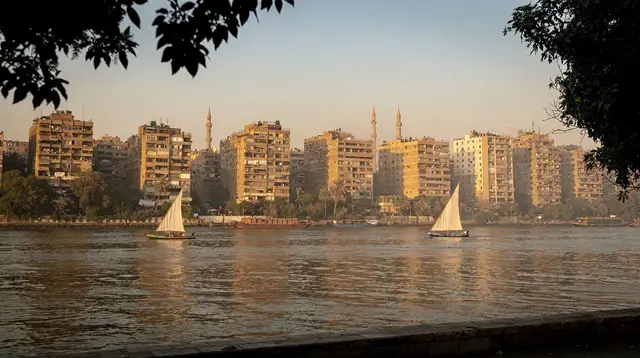
End the day with a felucca sail on the Nile at sunset if you have energy left — see Nile felucca and dinner cruises in Cairo.
Planning notes
| Day | Focus | Base | Car needed |
|---|---|---|---|
| 1 | Giza plateau, GEM | Giza or Cairo | Optional, short hop |
| 2 | Saqqara, Dahshur, Memphis | Cairo or Giza | Private driver, full day |
| 3 | Islamic Cairo, Coptic Cairo, NMEC | Cairo | Taxi/Uber between quarters |
A few things this itinerary deliberately leaves out: Alexandria (about 3 hours’ drive each way, covered in the four-day version instead), Luxor and Aswan (sold from Cairo as a flight or overnight sleeper train, never a day trip), and the White Desert or Fayoum (multi-day 4x4 trips, not a Cairo add-on). See How many days in Cairo if you’re deciding whether to extend.
Money: bring Egyptian pounds (EGP, written LE or E£) for small purchases and baksheesh; cards work at hotels and most restaurants but cash still matters at bazaars and for tipping. See Money, cards and ATMs in Cairo and Baksheesh and tipping in Egypt. Entry requires a visa for most nationalities — apply for an e-Visa at the official portal or arrange visa on arrival at Cairo’s airport if your nationality qualifies; see Egypt visa and entry rules rather than relying on a fixed fee quoted elsewhere.
Best months to run this itinerary are October through April, when daytime highs sit closer to the low-to-mid twenties Celsius and the outdoor stretches at Saqqara and Dahshur are far more comfortable. June through August often push past 35°C by mid-morning, which matters most on Day 2, where there’s little shelter between sites; if you’re travelling in summer, push your Saqqara start even earlier and treat the afternoon as downtime rather than sightseeing.
Frequently asked questions about this three-day Cairo itinerary
Is the Step Pyramid at Giza or Saqqara?
The Step Pyramid of Djoser is at Saqqara, not Giza. It’s a separate site about an hour south of the Giza plateau and is usually visited on a dedicated day with Dahshur and Memphis.
Where are the Bent Pyramid and Red Pyramid?
Both belong to Sneferu and are at Dahshur, a short drive past Saqqara. They are not at Giza or Saqqara itself.
Can I combine Giza and Saqqara in one day?
It’s possible with a private driver and an early start, but it makes for a long day given Cairo traffic. Splitting them across two days, as this itinerary does, leaves more time at each site.
Where are the royal mummies now?
The royal mummies moved to the National Museum of Egyptian Civilization in Fustat in April 2021. They are no longer displayed at the Egyptian Museum on Tahrir Square, which still holds a large separate collection.
Has the Egyptian Museum on Tahrir Square closed?
No. It has been open since 1902 and remains open alongside the newer Grand Egyptian Museum near Giza; the two hold different collections.
Do I need to dress differently for Islamic and Coptic Cairo?
Yes. Modest dress is expected at both mosques and churches, and women should carry a scarf to cover their hair at mosques. Shoes come off before entering mosque prayer halls.
Does this itinerary include Alexandria or Luxor?
No. This plan stays within Cairo, Giza and Saqqara. Alexandria is a separate day trip covered in the four-day itinerary, and Luxor is reached by flight or overnight train, not a day excursion.
What’s the best way to get between Islamic Cairo and Coptic Cairo?
A taxi or ride-hailing app (Uber or Careem) is the practical option; the quarters aren’t within comfortable walking distance of each other given Cairo’s traffic and layout.
Is Friday a good day to schedule this itinerary?
Friday is the weekly day off in Cairo, which changes opening hours and prayer-time crowds at mosques. If your three days land on a Friday, put that day at Islamic Cairo later in the morning rather than at the Citadel or Al-Azhar right around midday prayers, or shift Saqqara and Dahshur to that day instead since they aren’t affected the same way.
tours.3 days
Verified deep-linked GetYourGuide tours. Book through these links and we earn a small commission at no cost to you.
GetYourGuide does not provide a product photo for this activity — the image shows the meeting point, photographed by us.