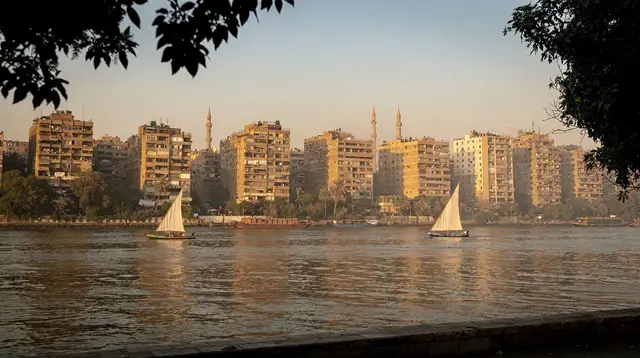
A district of its own, not a stop between two sights
Islamic Cairo is where visitors keep making the same mistake: treating it as a quick detour on the way to somewhere else. It isn’t. This is a dense, walkable district of mosques, gates, mausoleums and a working bazaar that has been built up in layers since the tenth century, and it holds enough on its own to fill a full day; see things to do in Islamic Cairo for the fuller list of what fits in a single visit. It’s separate from the wider Cairo area with its Nile-side neighborhoods, and separate again from Coptic Cairo, which sits south near Fustat and covers a different period and a different set of monuments entirely. Group the two together only if you’re comfortable with a long day of walking and driving; most visitors do them on separate mornings.
The core sits inland, east of the Nile, away from the hotels clustered in Zamalek, Garden City and Downtown, and well away from Giza. That means every visit here starts with a drive through some of the city’s most congested streets. Traffic is dense for most of the day, so a hotel in central Cairo puts you 20-40 minutes from the district on a clear run, and a hotel near the Giza pyramids adds another 20-30 minutes on top of that. Build the transfer into your plan rather than treating it as incidental; see Cairo traffic and realistic travel times for how that plays out across the rest of the city.
What’s actually in Islamic Cairo
The district groups several distinct sites, and it’s worth knowing them apart before you go rather than sorting it out on the ground:
| Site | What it is | Walking time from Khan el-Khalili |
|---|---|---|
| Citadel of Saladin and Mosque of Muhammad Ali | Fortified hilltop complex, Ottoman-era mosque with Cairo’s best rooftop views | Not walkable, short drive |
| Al-Azhar Mosque | Founded in 970, one of the oldest working mosques and universities in the world | 2-3 minutes |
| Khan el-Khalili | Historic bazaar, narrow lanes of shops, cafés and workshops | — |
| Al-Muizz Street | Pedestrian street lined with Mamluk and Ottoman monuments | 5-10 minutes |
| Sultan Hassan Mosque | Massive Mamluk-era mosque and madrasa, near the Citadel | Short drive from Khan el-Khalili |
Al-Azhar, Khan el-Khalili and the northern end of Al-Muizz Street sit close enough together to cover on foot in one stretch. The Citadel and the Sultan Hassan mosque are close to each other but a drive away from that cluster, so most half-day itineraries pick one side or the other, and a full day covers both.
The Citadel and the Mosque of Muhammad Ali
The Citadel of Saladin dominates the district’s skyline from a rocky outcrop east of the old city. Inside its walls, the Mosque of Muhammad Ali, with its grey-and-white stone and slim minarets, is the building most visitors photograph first — it’s often called the Alabaster Mosque locally, and its terrace gives one of the widest views over Cairo, with the Giza plateau visible in clear weather. The complex holds other mosques and military museums inside the same walls, so budget more time here than the mosque alone suggests. Shoes come off before entering any mosque interior, and women should have a scarf ready to cover their hair; the rule is enforced consistently, not a suggestion, and the same mosque etiquette applies at every site in this guide.
A private driver or a half-day tour is the practical way to reach the Citadel, since it sits apart from the walkable cluster around Khan el-Khalili. Several operators combine it with Al-Azhar and the bazaar in one sitting; see hiring a private driver in Cairo if you’d rather arrange transport yourself and set your own pace.
a half-day tour covering the Citadel, Al-Azhar and Khan el-Khalili is the standard way to link these sites without arranging transport yourself between each stop, and it fits the half-day version of this itinerary described above.
Al-Azhar Mosque, founded in 970
Al-Azhar Mosque is one of the oldest working mosques and universities anywhere, founded in 970 under the Fatimid dynasty, and it has been in continuous use since; the Al-Azhar Mosque guide goes into more depth on its history for anyone who wants it before visiting. It sits right at the edge of Khan el-Khalili, so it’s usually the first stop for anyone walking in from the bazaar side rather than arriving by car. The courtyard is large and mostly open, and it gives a useful contrast to the more ornate Ottoman-era buildings elsewhere in the district. As with every mosque here, dress modestly, remove shoes before stepping onto carpeted prayer areas, and expect women to be asked to cover their hair if they haven’t already.
Visitors who want a guided read of the mosque’s history and its place in the district, rather than working it out from a guidebook on the spot, tend to book a themed walk that starts here.
a guided walk through Al-Azhar and the surrounding Islamic Cairo sites covers this ground with someone who can explain what you’re looking at as you go, which matters more here than at sites with posted information.
Khan el-Khalili: a market, not a museum
Khan el-Khalili is a working bazaar, not a preserved exhibit, and it rewards treating it that way. Expect narrow covered lanes, metalwork, textiles, spice stalls, jewellery, and a steady stream of vendors used to dealing with tourists. Haggling is normal and expected on anything without a fixed price tag; walking away is usually enough to get a better offer if the first one feels high, and how to haggle in Cairo covers the etiquette in more detail. Cafés inside the market are a reasonable place to sit down mid-visit — this is one of the few spots in the district where a break doesn’t mean leaving the site. For more on the lanes themselves, the Khan el-Khalili bazaar guide breaks the market down section by section.
Evenings change the character of the district. The lanes stay busy after dark, lit and animated in a way the daytime crowds don’t quite match, and a few operators build an evening visit around dinner nearby.
an evening tour of the district with dinner near Al-Azhar Park is worth considering if your schedule leaves the daytime for the Citadel or the museums instead.
Al-Muizz Street: monuments in sequence
Al-Muizz Street is the pedestrian spine running north from Al-Azhar through the historic core, lined on both sides with Mamluk and Ottoman mosques, mausoleums, fountains and merchant houses, many still standing in close sequence. Walking its length is the closest thing Cairo has to an open-air museum of Islamic architecture, and it’s free to walk, though several individual buildings along it charge for entry. The Al-Muizz Street walk lays out a stop-by-stop route for anyone who wants a sequence rather than wandering. It connects naturally to Khan el-Khalili at its southern end, so a logical route runs Al-Azhar, the bazaar, then north up Al-Muizz Street as far as time and heat allow before turning back.
Midday sun on the street is intense for most of the year; an early start avoids the worst of it, and gives you first pick of the quieter lanes before the crowds build.
Sultan Hassan Mosque
The Sultan Hassan Mosque, near the Citadel, is one of the largest religious complexes from the Mamluk period, built at a scale that’s hard to appreciate from photographs — the entrance portal alone is taller than most buildings around it. It combines a mosque and a madrasa (religious school) in one structure, and the interior courtyard is one of the district’s more striking spaces once you’re inside; the Sultan Hassan Mosque guide covers the building’s layout and history in more detail. It pairs naturally with a Citadel visit given the short distance between the two, rather than with the Al-Azhar and Khan el-Khalili cluster on the other side of the district.
a private half-day tour of Islamic Cairo gives more flexibility to prioritize the Citadel and Sultan Hassan side of the district if that’s where your interest lies, rather than following a fixed group itinerary.
Getting there and getting around
None of these sites are within walking distance of Zamalek, Garden City or Downtown hotels, and none are close to Giza. A driver, ride-hailing app or organized tour is the realistic way in for most visitors; walking from a central hotel is not practical given the distances and the traffic along the way. Uber and Careem both operate here, though the Cairo metro doesn’t reach directly into the historic core, so it’s rarely the fastest option for this particular district. Once inside the district, the cluster around Al-Azhar, Khan el-Khalili and the southern stretch of Al-Muizz Street is genuinely walkable, and this is where most of a day should be spent on foot. The Citadel and Sultan Hassan sit apart and need a short drive to reach, even though they’re close to each other.
Traffic in Cairo runs heavy through most of the day, and a transfer that looks short on a map can run well past what the distance suggests. Building slack into a schedule that includes Islamic Cairo alongside another district on the same day is worth doing rather than assuming transfers will go quickly.
Dress and etiquette
Every mosque in this district expects modest dress and enforces it at the door. Shoulders and knees covered for everyone, women should carry a scarf to cover their hair before entering, and shoes come off before stepping onto carpeted prayer areas — most mosques provide somewhere to leave them, but a bag to carry them yourself is a reasonable backup. These aren’t informal suggestions; staff at the door will turn away visitors who arrive without appropriate clothing, so it’s worth sorting this out before you leave the hotel rather than at the entrance. What to wear in Cairo has a fuller packing list that covers this district alongside the rest of the city.
What to skip if you’re short on time
If a full day isn’t possible, the Al-Azhar and Khan el-Khalili cluster gives the most return for the least travel, since it’s walkable once you’re there and doesn’t require a second drive to the Citadel side of the district. The Citadel’s rooftop view is worth the extra trip if photography or the wider city panorama matters to you; if it doesn’t, Sultan Hassan and the Citadel can reasonably be dropped from a half-day visit without missing the district’s core character.
Islamic Cairo: frequently asked questions
Is Islamic Cairo safe to walk around?
Islamic Cairo is a heavily visited district and generally safe for walking during the day, including through Khan el-Khalili and along Al-Muizz Street. Keep the normal city-centre habits: watch for pickpockets in crowded lanes, agree prices before buying, and be ready for persistent vendors near the bazaar entrances. For the wider picture beyond this one district, see is Cairo safe for tourists.
How do I get from a Giza hotel to Islamic Cairo?
There’s no walking route; a private driver, ride-hailing app or organized tour is the practical option. Expect roughly 40-70 minutes each way depending on traffic, since the route crosses a large stretch of the city centre.
Do I need to cover my hair to enter every building in Islamic Cairo?
Hair covering for women is required inside working mosques such as Al-Azhar, the Mosque of Muhammad Ali and Sultan Hassan. Museums and secular buildings along Al-Muizz Street don’t carry the same rule, but modest dress is still expected throughout the district.
Can I combine Islamic Cairo and Coptic Cairo in one day?
It’s possible but long, since the two districts sit apart and each deserves unwalked time on its own. Most visitors split them across two separate outings rather than rushing both into a single day, though a tight Islamic and Coptic Cairo in one day itinerary does exist for travelers who only have one day free.
Is Khan el-Khalili worth visiting if I don’t plan to buy anything?
Yes. The lanes, the architecture and the café culture inside the market are worth seeing on their own, and Al-Azhar Mosque sits right at its edge, so a walk-through works even without shopping in mind.
What’s the best time of day to visit the Citadel?
Morning, both for lighter crowds and for the clearest views from the terrace before afternoon haze sets in. In summer, an early visit also avoids the worst of the midday heat on the exposed hilltop.
Should I book a guided tour or visit Islamic Cairo independently?
Either works, but a guide adds real value here given how much history is packed into a small area with limited on-site information. A half-day or private tour is worth it for a first visit; independent walking suits travelers who already know the district’s layout or prefer to set their own pace.
How does Islamic Cairo compare to Coptic Cairo for a first-time visitor?
Islamic Cairo covers a longer historical span and a wider range of monument types, from the tenth-century Al-Azhar Mosque to Ottoman-era additions at the Citadel, and it includes the district’s main market. Coptic Cairo is smaller, more compact, and focused on early Christian sites. Most first-time visitors find Islamic Cairo the more substantial half-day or full-day outing.