Things to do in Coptic Cairo
What is there to do in Coptic Cairo?
Coptic Cairo is a small walled quarter with the Hanging Church, the Ben Ezra Synagogue and the Coptic Museum, all reachable on foot in a couple of hours. The royal mummies once shown at the Egyptian Museum in Tahrir are now displayed at the National Museum of Egyptian Civilization in nearby Fustat, not inside Coptic Cairo itself.
A quieter quarter than its neighbour
Coptic Cairo sits inside what was once the Roman fortress of Babylon, on the east bank of the Nile in Old Cairo. It is smaller and calmer than Islamic Cairo a few kilometres north, with narrow lanes, low stone walls and a handful of sites you can walk between in an afternoon rather than a full day. Where Islamic Cairo has minarets, mosques and the noise of Khan el-Khalili, Coptic Cairo is churches, a synagogue and a museum, all connected to Egypt’s early Christian and Jewish history. This page covers the quarter on its own terms: what is actually here, what it looks like day to day, and how it fits with the National Museum of Egyptian Civilization next door in Fustat.
The main sites are the Hanging Church, the Ben Ezra Synagogue and the Coptic Museum, plus a scatter of smaller churches inside and around the old fortress walls. None of them charge much time individually, but the walking between them, checking bags at gates and pausing at each entrance adds up, so budget two to three hours rather than a quick hour-long stop.
Getting there
The nearest metro stop is Mar Girgis, on Cairo’s Line 1, which puts you at the gates of the quarter within a couple of minutes on foot. From central Cairo or Zamalek, a taxi or Uber or Careem ride typically runs 20-40 minutes depending on traffic, since Cairo traffic is dense through most of the day. If you are staying near the pyramids in Giza, allow closer to 45-60 minutes each way given the distance and road conditions.
Line 1 is Cairo’s oldest metro line and connects Mar Girgis directly to stops near Tahrir and Downtown, so first-time users unfamiliar with buying tickets or navigating the platforms may want to read the Cairo Metro guide before this trip rather than figuring it out at the station.
Coptic Cairo pairs naturally with a wider Old Cairo outing. Several operators combine it with the Citadel of Saladin, the Mosque of Muhammad Ali and Khan el-Khalili bazaar in a single day, which makes sense logistically even though those sites belong to the separate Islamic Cairo quarter covered on its own guide.
Cairo: Coptic Cairo and Cave Church Private Day TourThe Hanging Church
The Hanging Church (El Muallaqa) is the best-known site in the quarter, named for its position built over the remains of a Roman gate, with the nave suspended above the old fortress structure. The current building dates largely from later centuries, though a church has stood on or near this spot since at least the 4th century. Inside, look for the carved wooden screens, the marble pulpit resting on columns, and the icons lining the walls, several of them centuries old.
The approach is a short flight of steps up from street level, and the church can be busy with both tourists and worshippers, particularly around Sunday services, so a weekday morning visit tends to be calmer. There is no fixed admission fee posted here in this guide since amounts change; check current details when you book or on arrival.
Crowds build steadily through the late morning as day-tour buses reach Old Cairo, so arriving at opening keeps the lanes around the Hanging Church and Ben Ezra Synagogue manageable. By early afternoon, especially on days when a cruise group is in town, the entrance steps and courtyard in front of the church can bottleneck. Friday and Sunday mornings add local worshippers to the mix, which is worth planning around if the goal is quiet photographs rather than a slow browse.
Ben Ezra Synagogue
A short walk from the Hanging Church, the Ben Ezra Synagogue is Cairo’s oldest surviving synagogue, associated with the Cairo Geniza, the trove of medieval Jewish manuscripts discovered here in the 19th century and now dispersed among research libraries abroad. The building itself is modest compared with the churches nearby, but it is a rare surviving marker of a Jewish community that was once substantial in Cairo and has now largely dispersed. Interior photography rules vary, so ask at the entrance before shooting.
For a deeper look at the architecture and history behind both the church and the synagogue, including details easy to miss on a quick pass, the dedicated Hanging Church and Ben Ezra Synagogue guide covers each site in more depth than fits here.
Coptic Museum
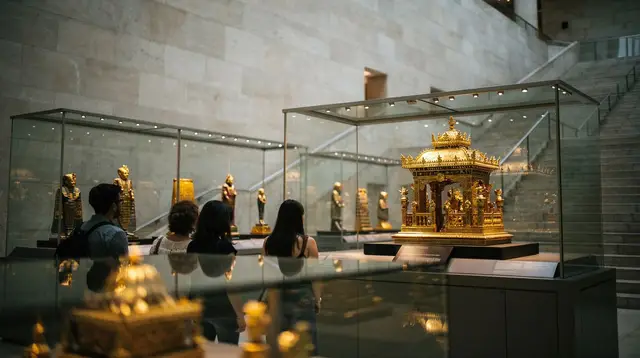
The Coptic Museum sits within the old fortress walls and holds the largest collection of Coptic Christian art anywhere, spanning textiles, manuscripts, stonework and icons from the early centuries of Christianity in Egypt through the medieval period. It is the one indoor, air-conditioned stop in the quarter, which makes it a useful break from the heat in summer. Plan on 45 minutes to an hour if you want to see the main galleries without rushing; skip it only if you are genuinely tight on time, since it is the single best introduction to Coptic art in the country.
Visitors who want a fuller sense of the museum’s layout and standout pieces before arriving can check the separate Coptic Museum guide, which goes room by room rather than summarising the whole collection in a paragraph.
Religion Tour to Islamic and Coptic Sights in CairoSmaller churches and the old fortress walls
Beyond the three main stops, the quarter holds several smaller churches worth a glance if time allows, including the Church of St. Sergius and Bacchus (Abu Serga), traditionally associated with a resting place of the Holy Family, and St. George’s Church, notable for its round shape unusual among Cairo churches. These add depth rather than length to a visit; most visitors treat them as a five-minute detour rather than a separate stop.
The Roman fortress walls and round towers that gave the neighbourhood its old name, Babylon, are still visible in places, particularly near the entrance to the Hanging Church. They are a reminder that this quarter predates most of what is now called Old Cairo by several centuries.
Accessibility
Coptic Cairo is not an easy quarter for visitors with mobility difficulties. The approach to the Hanging Church involves a flight of stone steps with no ramp or lift alternative, and the lanes between the Hanging Church, Ben Ezra Synagogue and Coptic Museum are paved in uneven, centuries-old stone that can be slow going with a cane, walker or wheelchair. The Coptic Museum itself is more manageable, with level floors inside once through the entrance, though the approach path shares the same rough paving as the rest of the quarter.
Anyone planning a visit with limited mobility should budget extra time, consider a private guide who can flag the smoothest routes between stops, and expect to skip the Hanging Church’s upper level if stairs are not manageable. None of the sites here have dedicated accessible entrances of the kind found at newer museums like the Grand Egyptian Museum.
If you only have half a day
If you only have half a day in Old Cairo, prioritise the Hanging Church and the Coptic Museum over the smaller churches and skip the NMEC extension; that combination covers the quarter’s two most substantial sites in under two hours and leaves room for the walk between them. Travellers with a full day are better placed to add the Ben Ezra Synagogue at an unhurried pace, wander past Abu Serga and St. George’s, and still cross to the NMEC in Fustat afterwards for the royal mummies without feeling rushed.
Trying to fit all of it, plus a side trip to Islamic Cairo, into a single half-day outing usually means shortchanging at least one stop. Better to treat Coptic Cairo and Islamic Cairo as two separate half-days, or accept a longer, more tiring full day if time in Cairo is genuinely limited.
What can disappoint
A few things catch first-time visitors off guard. The Coptic Museum’s lighting is deliberately dim in several galleries to protect textiles and manuscripts, which some visitors find atmospheric and others find frustrating for photography. Vendors near the entrance gates can be persistent about guiding you or selling postcards, more so than in Islamic Cairo’s Khan el-Khalili, since foot traffic here is lighter and more concentrated at the few entry points.
Church interiors sometimes close briefly during services with little advance notice posted outside, which can mean waiting or rearranging the order of a visit. None of this makes Coptic Cairo not worth the trip, but it is worth arriving without the expectation of an empty, curated museum experience.
Where the royal mummies actually are
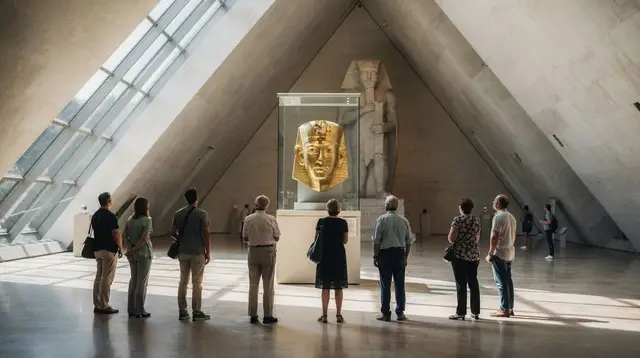
This is the point worth getting right before you go: the royal mummies are not in Coptic Cairo, and they are no longer at the Egyptian Museum on Tahrir Square either. In April 2021, twenty-two royal mummies were moved in a televised procession, the Pharaohs’ Golden Parade, from Tahrir to the National Museum of Egyptian Civilization (NMEC) in Fustat, a short distance from the Coptic Cairo gates. The Egyptian Museum on Tahrir still operates and still holds a major collection, including Tutankhamun-era pieces predating the transfer of his full collection to the Grand Egyptian Museum; it has not closed. It is simply a separate site, covered on its own page, and not part of the Coptic Cairo walking route.
Readers weighing whether to also visit the Tahrir museum on the same trip can compare what each site now holds in the separate Egyptian Museum Tahrir guide, since the two collections no longer overlap the way they did before 2021.
Because the NMEC sits so close to Coptic Cairo, the two combine well in a single outing. Many visitors do the churches and museum first, since they are compact and self-contained, then walk or take a short taxi to the NMEC to see the mummies hall, which requires a separate ticket and a bit more time given its size.
Cairo: Tour to Coptic Cairo Cave Church and Felucca RideWhat to wear
Coptic Cairo’s churches expect modest dress: shoulders and knees covered for everyone, and no sleeveless tops. This differs slightly from the mosque etiquette covered on the Islamic Cairo activities page, where women are also asked to cover their hair; that requirement does not generally apply in the churches here. Shoes typically stay on inside the churches, unlike mosques where they come off at the door. Bring a light scarf or shawl regardless, since it covers both bases if your itinerary includes both quarters on the same day.
For the fuller set of rules that apply inside mosques specifically, including hair covering and prayer-time closures, see the separate mosque etiquette guide; none of those extra rules carry over to the churches described here.
Combining Coptic Cairo with the rest of Old Cairo
A private half-day tour is the most time-efficient way to see Coptic Cairo alongside the Citadel, Al-Azhar, and Khan el-Khalili, since a driver removes the guesswork of navigating between quarters in Cairo’s dense traffic. Group tours cover similar ground at a lower cost but on a fixed schedule with less flexibility around each stop.
Cairo: Old Cairo and Khan el-Khalili Bazaar| Option | What it covers | Best for |
|---|---|---|
| Coptic Cairo self-guided | Hanging Church, Ben Ezra Synagogue, Coptic Museum | Independent travellers with 2-3 hours |
| Coptic Cairo + NMEC | Coptic quarter plus the royal mummies hall in Fustat | Anyone wanting the full historical picture in one area |
| Half-day Old Cairo tour | Coptic Cairo plus the Citadel and Khan el-Khalili | Visitors short on days who want both quarters covered |
| Combined religious sites tour | Coptic and Islamic Cairo sights together | Travellers focused on Cairo’s religious history |
Practical notes
Bring cash in Egyptian pounds for small purchases and tips (baksheesh) around the quarter, since cards are not reliably accepted at every entrance or stall. Water is worth carrying, particularly in summer, and it should be bottled rather than tap water. The quarter is walkable but has uneven stone paving in places, so flat shoes make the visit easier than sandals or heels.
Friday mornings can be quieter for tourists since it is the weekly day of rest, though church services around Sunday morning draw larger crowds of worshippers. During Ramadan, opening hours at some of the smaller sites may shift, so it is worth checking ahead if visiting during that period.
Cairo: Food Tour
Questions about visiting Coptic Cairo
What is there to do in Coptic Cairo?
Coptic Cairo is a small walled quarter with the Hanging Church, the Ben Ezra Synagogue and the Coptic Museum, all reachable on foot in a couple of hours. The royal mummies once shown at the Egyptian Museum in Tahrir are now displayed at the National Museum of Egyptian Civilization in nearby Fustat, not inside Coptic Cairo itself.
Are the royal mummies in Coptic Cairo?
No. The royal mummies moved to the National Museum of Egyptian Civilization (NMEC) in Fustat in April 2021, during the Pharaohs’ Golden Parade. Coptic Cairo itself holds the Hanging Church, the Ben Ezra Synagogue and the Coptic Museum, with no mummies on display.
Is the Egyptian Museum in Tahrir part of Coptic Cairo?
No, they are separate. The Egyptian Museum on Tahrir Square is across the city centre, not in the Coptic Cairo quarter, and it still operates its own collection. It is covered on its own page, not here.
How long does Coptic Cairo take to visit?
Two to three hours covers the Hanging Church, the Ben Ezra Synagogue and the Coptic Museum at an unhurried pace. Add 20-30 minutes of walking time between the three, since the lanes are narrow and often busy with other visitors.
What should I wear in Coptic Cairo’s churches?
Shoulders and knees covered for both women and men, and nothing sleeveless. Unlike the mosques of Islamic Cairo, women are not required to cover their hair here, and shoes generally stay on inside the churches.
Is Coptic Cairo the same as Islamic Cairo?
No. They are separate historic quarters a short taxi or metro ride apart. Islamic Cairo centres on the Citadel, Al-Azhar and Khan el-Khalili; Coptic Cairo is smaller, quieter, and focused on the city’s early Christian and Jewish heritage.
Can I combine Coptic Cairo with the NMEC in one visit?
Yes, and it is a natural pairing since the NMEC sits close to the Coptic Cairo gates in Fustat. Many visitors do the churches and museum first, then walk or take a short taxi to the NMEC for the royal mummies hall.
Do I need a guide for Coptic Cairo?
Not strictly, since the quarter is compact and well signed, but a guide adds context on the Old Testament and early Christian references tied to each site. A private half-day tour is the more efficient option if Coptic Cairo is combined with the Citadel or Khan el-Khalili on the same outing.
Is Coptic Cairo accessible for visitors with limited mobility?
Not easily. The approach to the Hanging Church is a flight of stone steps with no ramp, and the lanes connecting the three main sites are uneven historic stone paving. The Coptic Museum’s interior is more level once inside, but budget extra time and consider a private guide who knows the smoothest routes if mobility is a concern.
When is Coptic Cairo least crowded?
Weekday mornings soon after opening tend to be quietest, before day-tour groups and cruise parties arrive. Sunday mornings bring larger numbers of worshippers to the Hanging Church for services, and afternoons generally see more foot traffic through the narrow lanes than mornings do.
Cairo trip planning and itinerary tours on GetYourGuide
Verified deep-linked GetYourGuide tours. Book through these links and we earn a small commission at no cost to you.
GetYourGuide does not provide a product photo for this activity — the image shows the meeting point, photographed by us.