Can you go inside the pyramids at Giza?
What you actually see on the Giza plateau
The question I get most before a first trip to Cairo isn’t about food or safety, it’s this one: can you actually go inside the pyramids, or do you just look at them from a bus window. The honest answer sits between those two extremes, and it’s worth explaining properly because most articles either oversell it or don’t bother describing the site at all.
There are three pyramids at Giza, not two, not four. Khufu is the largest, the Great Pyramid, the only one of the seven wonders of the ancient world still standing. Khafre sits next to it, slightly smaller but on higher ground, so from some angles it looks taller than Khufu — it isn’t. Menkaure is the smallest of the three, noticeably so once you’re standing between them. Next to Khafre is the Great Sphinx, carved into the bedrock, facing east. That’s the full set. If a tour description or a photo caption mentions a fourth pyramid on the plateau, or drops one of the three, something is wrong with it.
You walk the plateau on foot or by camel or horse from one pyramid to the next — the distances are longer than photos suggest, and the sand and heat make it slower going than it looks. I found the scale genuinely different from what pictures convey: Khufu’s blocks are chest-high in places, and standing at the base changes how you read the whole structure.
So, interior access
Inside access exists at the site, on and off, for a limited number of visitors per day, usually on a separate ticket bought at the plateau rather than online in advance, and the rules around which pyramid is open and for how long have shifted more than once in recent years. I’m not going to hand you a fixed price or a fixed schedule here, because both change and a wrong number is worse than no number. For what’s actually available the week you travel, check the entry conditions on your Giza Pyramids Qr Code Entry Ticket listing, or ask directly when you book a guided visit — the Giza pyramids entry ticket page is where GetYourGuide keeps that current, not this page.
What I’d set expectations on: the interior chambers, when open, are steep, narrow, low-ceilinged and warm, with a queue that moves slowly in one direction. It’s a few minutes inside, not a tour. Some visitors find it claustrophobic and skip it without regret; others consider it the actual highlight of the day. Neither reaction is wrong. What matters is not building a whole day around interior access and then finding it closed — plan the plateau visit as worthwhile on its own, with the interior as a bonus if it’s running.
Guided or on your own
You can visit independently — buy a plateau entry ticket, walk between the three pyramids and the Sphinx at your own pace, and skip anything you’d rather not pay extra for. That works fine if you’re comfortable managing the persistent offers of camel rides and “guide” services that come up constantly near the entrances; I go through that separately in avoiding pushy touts at the pyramids, because it’s the single most common complaint I hear from first-time visitors.
A guided visit removes most of that friction and adds context that’s genuinely useful on a site with almost no on-site signage. A standard half-day group visit to the pyramids and Sphinx covers the plateau with an Egyptologist guide and usually a stop at a viewpoint for the classic wide shot of all three pyramids together. If you’d rather not share the pace with a group, a private pyramids visit that includes a stop at a nearby Bedouin village gives you a slower morning and a look at daily life at the edge of the desert, which I found a good contrast to the monuments themselves.
Either way, go early. The plateau gets hot and crowded by late morning, and the light is better for photos before the haze builds up. For the full self-paced route around the site, see my self-guided plateau walk.
What’s next door, and what isn’t part of this visit
The Grand Egyptian Museum sits right beside the plateau, and I’d treat it as a separate half-day rather than folding it into your pyramids visit — I cover that decision on its own in Grand Egyptian Museum vs Egyptian Museum in Tahrir. Getting to Giza from a central Cairo hotel also deserves its own planning given how unpredictable the traffic is; that’s in getting to the Giza pyramids rather than here.
One evening option worth knowing about: the sound and light show runs after dark, with the pyramids and Sphinx lit up and narrated. It’s a different kind of visit from the daytime walk — you’re seated, not walking the site — and works well as an add-on for the same trip rather than a replacement for seeing the plateau by day.
Practical notes before you go
- Buy site tickets and any interior-access ticket through your hotel, a licensed operator, or the booking pages linked here — not from someone approaching you at the gate.
- Bring cash in Egyptian pounds for small costs on site; cards aren’t reliably usable at the plateau itself.
- Wear closed shoes. The ground is uneven sand and rock, not paved paths.
- If mobility is a concern, read accessibility at the Giza pyramids before booking — the terrain is a real factor, not a minor one.
- Traveling with kids, see Giza with children for what’s manageable and what isn’t.
- Photography of the monuments themselves is unrestricted, but check photography rules at Egyptian sites for camera and tripod policies before you pack heavy gear.
- If a museum stop is part of your day, a private visit to the Grand Egyptian Museum booked separately keeps both halves of the day unrushed.
- For a full ticket breakdown across Cairo’s main sites, see how sightseeing tickets work in Cairo.
Frequently asked questions about visiting the pyramids at Giza
How many pyramids are there at Giza?
Three: Khufu, Khafre and Menkaure, plus the Great Sphinx standing separately beside Khafre. Any description that counts two or four is wrong.
Can you go inside the pyramids?
Interior access exists for a limited number of visitors on a separate ticket, but which pyramid is open and on what terms changes. Check the current status on your booking page before planning around it.
Which pyramid is the biggest?
Khufu, the Great Pyramid, is the largest and the only ancient wonder of the world still standing. Khafre looks taller from some angles because it sits on higher ground, but it’s smaller.
Is the Grand Egyptian Museum part of the pyramids visit?
It’s next door but I treat it as a separate half-day. Combining both into one visit usually means rushing one of them.
Is the sound and light show worth adding?
It’s a different, seated evening experience rather than a substitute for the daytime walk around the plateau. Worth it as an add-on if you have the evening free.
Do I need a guide to visit the pyramids?
No, independent visits are straightforward, but a guide removes the hassle of persistent touts near the entrances and adds context the site itself doesn’t provide.
What should I wear and bring?
Closed shoes for uneven ground, cash in Egyptian pounds for small on-site costs, and sun protection — there’s very little shade on the plateau.
tours.Practical
Verified deep-linked GetYourGuide tours. Book through these links and we earn a small commission at no cost to you.
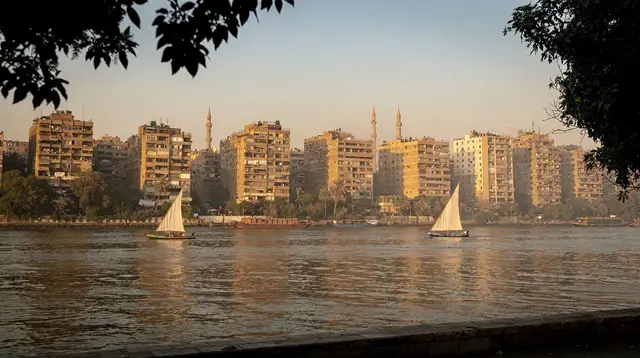
GetYourGuide does not provide a product photo for this activity — the image shows the meeting point, photographed by us.