Cairo food tours: markets, street food and old-city eating
Are food tours in Cairo worth it?
Yes for a first visit to the old-city markets: a guide navigates Khan el-Khalili's back alleys, orders in Arabic and knows which stalls are consistent. Tap water is never safe on these walks, so stick to bottled or sealed drinks even mid-tasting.
Why eat your way through Cairo instead of just sightseeing
Cairo’s monuments get most of the attention, but the city’s markets and street corners are where its daily rhythm actually shows up. A food-focused walk trades the queue at a ticket booth for a stool at a koshary counter, a glass of hibiscus tea in an alley café, and the smell of grilled meat drifting through Khan el-Khalili after dark. This page is about that angle specifically: markets, street food, tea and coffee culture, and the sensory side of the old city. For the monuments themselves — the Citadel, Al-Azhar, the walk down Al-Muizz Street — see Cairo city tours and Islamic Cairo tours instead; this guide deliberately skips the building-by-building history to focus on what you eat and where.
Most food-oriented visits sit within Islamic Cairo and the older, denser parts of central Cairo, since that’s where the market density and the widest range of small, specific vendors survive. A guided walk here isn’t about efficiency in the way a monument itinerary is — it’s about a local who knows which stall does one dish well and has done it the same way for years.
What a Cairo food tour actually covers
A typical evening food walk moves on foot through a handful of stops rather than a formal restaurant sequence. Expect some combination of the following, though the exact route depends on the operator and the night:
- A koshary stop — Egypt’s layered rice, lentil, macaroni and crispy-onion dish, usually eaten at a counter rather than a table.
- Ful and taameya (stewed fava beans and Egyptian-style falafel), more often a breakfast food but available through the day at some stalls.
- Grilled street snacks — kofta, sausage, or hawawshi (spiced meat baked inside flatbread).
- A tea or coffee stop in one of the old coffeehouses near Khan el-Khalili, where sweet black tea, karkadeh (hibiscus tea) and Turkish-style coffee are the usual options.
- Sweets — Egyptian pastries, dried fruit and nuts sold by weight, or seasonal treats depending on the time of year.
None of this replaces a sit-down dinner; it’s a tasting route, and most tours warn you to arrive a little hungry rather than full. A guided food tour with a local family, which some operators pair with a short Nile boat element, extends the format into a home-style meal rather than only street stalls — useful if you want a slower, seated finish to the evening.
Book a guided evening food tour through Cairo’s markets and street food stallsKhan el-Khalili after dark: the food angle
By day, Khan el-Khalili is a shopping bazaar — spices, brass, papyrus, jewellery — and the crowd is mostly tourists working the main alley. In the evening, the character shifts. Locals arrive for tea, shisha and food at the coffeehouses tucked into side lanes, and the market itself thins out into a quieter, more residential feel once the shop shutters start coming down.
Most of the food isn’t inside the tourist alley at all — it’s in the surrounding streets, where small stalls serve a single dish each and don’t bother with an English menu or a sign in Latin script. This is the part a guide is genuinely useful for: not because the area is unsafe, but because the good stalls aren’t obvious from the street and don’t advertise. Left to guess, a visitor typically ends up eating at whichever place happens to be on the main tourist path, which is rarely the best option.
If you’d rather browse and shop than eat, the general market experience and haggling etiquette are covered separately in how to haggle in Cairo — worth a read before or after a food walk, since the same negotiating norms apply to some food vendors selling by weight.
Cooking classes and a slower alternative
For a different pace, a hands-on cooking class swaps the walking-and-tasting format for a few hours in a kitchen, usually covering two or three classic dishes — koshary, ful and taameya, or a stuffed vegetable dish, depending on the operator. It suits travellers who want to take something home beyond photographs, or who prefer a seated, unhurried session over standing at street stalls. It’s a reasonable pairing with a market walk on a different evening rather than the same day, since the two formats don’t overlap much.
Join a hands-on Egyptian cooking class in CairoKoshary: one restaurant worth knowing by name
Koshary is common enough that almost any street corner sells a version of it, but one restaurant near the historic centre has built a long-standing reputation specifically for it, and a number of operators run a short, dedicated tour built around a single sit-down visit there rather than a multi-stop walk. It’s a good option if you want to try Cairo’s best-known dish properly rather than sample a dozen smaller things, or if you’re short on time and want one focused stop instead of an evening-long route.
Take a short tour focused on a well-known Cairo koshary restaurantTea, coffee and the coffeehouse habit
Cairo’s traditional coffeehouses (ahwas) are as much a part of the food scene as the stalls themselves. They’re where the pace of a food walk slows down — a chance to sit, watch the street, and drink sweet black tea or karkadeh rather than keep moving between stops. Turkish-style coffee, served thick and unfiltered with the grounds settled at the bottom of the cup, is the other standard order. Shisha (water pipe) is widely available at the same coffeehouses, though it’s not part of a typical food-tour stop and is easy to skip if it doesn’t interest you.
These coffeehouses cluster most densely around the old city and near Khan el-Khalili, but smaller neighbourhood versions exist all over central Cairo, including around Zamalek and the Nile corniche if you want a quieter, less touristed version of the same ritual.
Water and food safety: the part not to skip
Cairo tap water is not safe for visitors to drink, and that rule doesn’t pause for a food tasting. Stick to bottled or sealed water throughout an evening food walk, even between stops, and be cautious with ice unless a vendor confirms it was made from bottled water. This applies as much to fresh juice stalls, which are common and generally good, as it does to tea and coffee — ask what water was used if you’re unsure, though hot drinks made with boiled water are typically fine.
Street food itself is a separate question from water, and the general rule is turnover: stalls cooking food to order in front of you, with a visible queue of local customers, are the safer bet over anything that’s been sitting out. A guided tour generally routes around the less reliable options by default, which is one of its practical advantages over wandering in cold. For the fuller picture on food and water precautions beyond this specific walk, see food and water safety in Cairo.
How a food walk fits around the rest of your Cairo days
A market and food evening pairs naturally with a day that’s otherwise been spent on monuments — Giza in the morning, a food walk after the day cools down. It doesn’t need its own full day, and cramming it onto the same afternoon as a long site visit like Islamic Cairo’s mosques and the Citadel usually means arriving tired rather than hungry, which defeats the point. If you’re mapping out a short trip more broadly, one day in Cairo gives a sense of how a food evening slots against sightseeing time.
Getting to and from the old city in the evening is straightforward: the Cairo metro reaches within walking distance of the historic centre, and Uber and Careem are the simplest door-to-door option for a group heading back to a hotel in Zamalek, Garden City or Giza after dark. Cairo’s traffic doesn’t fully let up in the evening, so build in more time than a map distance suggests, particularly on a Thursday or Friday night when the old city gets busiest.
What a food tour is not
It’s worth being clear about scope. A food and market walk is not a substitute for visiting the Citadel, Al-Azhar or the Al-Muizz Street architecture — those are covered on Cairo city tours and Islamic Cairo tours, and combining a serious history-and-architecture itinerary with a full food walk on the same day tends to overload both. It’s also not a formal restaurant crawl with reservations and courses; it’s an informal, standing-and-walking format built around small portions at several stops.
If you want the market shopping side of Khan el-Khalili rather than the food side — carpets, brass, papyrus, jewellery, and the haggling that goes with it — that’s a separate experience worth planning on its own evening, covered in how to haggle in Cairo and what to buy at Khan el-Khalili.
Quick comparison: food-tour formats in Cairo
| Format | Typical length | Best for |
|---|---|---|
| Evening street food walk | 3–4 hours | First-time visitors, multiple small tastings |
| Koshary restaurant visit | Under 2 hours | Trying one signature dish properly, time-limited evenings |
| Cooking class | 3–4 hours | Hands-on learning, a quieter and seated format |
| Food tour with a local family | Half-day, often evening | A home-style meal plus a more personal setting |
Food and markets in Cairo: FAQ
Is street food in Cairo safe to eat?
Stalls with high turnover and food cooked to order in front of you are generally fine. Avoid anything sitting at room temperature for a while, and always drink bottled water rather than tap water, including for ice unless you know it’s made from bottled water.
What is the signature Cairo street food to try?
Koshary, a layered dish of rice, lentils, macaroni and fried onions, is the closest thing Cairo has to a national street dish. Ful and taameya (Egyptian fava beans and falafel) for breakfast, and grilled kofta or hawawshi for something heartier, round out a typical tasting route.
Do I need to book a guided food tour, or can I explore Khan el-Khalili on my own?
Khan el-Khalili is walkable solo, but its food stalls are scattered through narrow side lanes that aren’t obvious from the main tourist alley. A guide saves time, handles ordering, and generally gets a fairer price than a visibly lost tourist would.
How long does a Cairo food tour usually run?
Most walking food tours run three to four hours in the evening, covering a handful of stops on foot with short stretches between them. Combining a food walk with a full day of monument sightseeing on the same day tends to feel rushed.
Is tap water safe during a food tasting in Cairo?
No. Cairo tap water is not considered safe for visitors to drink, and that applies during food tours as much as anywhere else. Carry bottled water and ask vendors whether drinks or ice were made with bottled water.
What should I wear on a market food walk in Islamic Cairo?
Comfortable closed shoes for uneven paving, and modest clothing covering shoulders and knees, since the route often passes close to mosques even when it doesn’t enter them. Evenings can cool down quickly outside summer, so a light layer helps.
Can vegetarians eat well on a Cairo food tour?
Yes. Ful, taameya, koshary and most mezze are vegetarian by default, and many stalls in and around Khan el-Khalili sell nuts, dried fruit, pastries and fresh juice alongside the savoury dishes.
Cairo food and cooking tours on GetYourGuide
Verified deep-linked GetYourGuide tours. Book through these links and we earn a small commission at no cost to you.
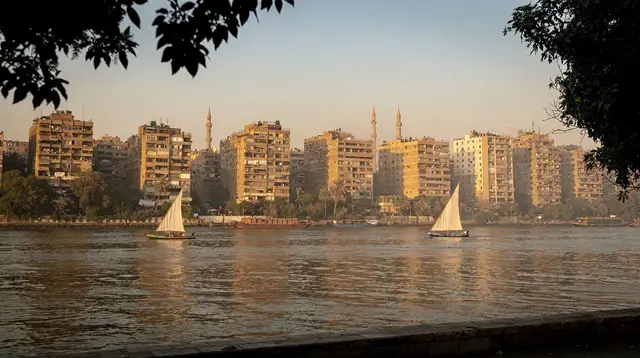
GetYourGuide does not provide a product photo for this activity — the image shows the meeting point, photographed by us.