Hiring an Egyptologist guide in Cairo
Is it worth hiring a private Egyptologist guide in Cairo?
It depends on the site. At Giza, Saqqara, the Grand Egyptian Museum and Islamic Cairo, a qualified guide adds real historical context and handles logistics across a spread-out day. For a walk in Zamalek or along the Nile corniche, a guide adds little and a self-guided stroll works fine.
Cairo puts thousands of years of history within a short drive of most hotels, but that density is exactly what makes an unguided visit uneven. A morning can swing between a site that explains itself and one that gives up almost nothing without context. This page is about the guide itself, as a service you can book by the hour, the half-day or the trip, not about any single site. For what to actually see once you’re there, the destination and site guides linked throughout this page do that job.
What a qualified guide actually adds
A private Egyptologist guide does three things that a guidebook or a phone can’t fully replace.
The first is historical reading. Cairo’s monuments were built, rebuilt, renamed and reused across dynasties, and a site that looks like a single structure is often several centuries layered on top of each other. A trained guide can point out which parts of the Citadel of Saladin and Muhammad Ali Mosque belong to which era, or explain why the Step Pyramid of Djoser at Saqqara predates the pyramids at Giza by centuries, in a way that signage rarely does on-site.
The second is logistics across a spread-out day. Cairo traffic is dense for most of the day, and a day that covers Giza, Saqqara and Memphis, or a loop through Islamic and Coptic Cairo, depends on sequencing stops sensibly and briefing the driver ahead of time. A guide who does this regularly reads Cairo traffic and realistic travel times correctly and builds slack into the plan instead of promising a schedule that the roads won’t allow.
The third is an honest read of what’s worth the time. A good guide will tell you plainly when a stop is overrated for the length of the detour, or when a famous photo spot draws a crowd that makes the actual visit worse than a quieter angle nearby. That kind of candour is the opposite of a fixed group-tour script that hits every stop regardless of conditions on the day.
None of this replaces knowing what’s actually at each site. The destination pages and the individual guides for Giza Pyramids tours, Saqqara, Memphis and Dahshur tours and the Grand Egyptian Museum tours cover what to expect at each place. This page only covers whether paying for a guide to walk you through it is worth doing.
Where a guide changes the visit
Not every stop benefits equally from a guide, and it helps to be specific about where the difference is real.
Giza plateau. The pyramids of Khufu, Khafre and Menkaure and the Great Sphinx are easy to locate on your own, and the site itself doesn’t require a guide to access. What a guide adds here is context on how the pyramids were built and dated, and a buffer against the touts and unofficial “guides” who approach visitors near the entrance and the Sphinx viewpoint. It’s a case where a guide is useful but not essential.
Saqqara and Dahshur. This is where a guide earns its cost more clearly. Saqqara spreads several distinct monuments, including the Step Pyramid of Djoser, across a larger and less signposted site than Giza, and combining it with Dahshur’s Bent Pyramid and Red Pyramid and with Memphis in one day means careful sequencing. A guide who has done the route before knows which order avoids backtracking and how much time each stop genuinely needs. See Saqqara, Memphis and Dahshur tours for how these three normally combine.
Islamic Cairo. This is arguably the strongest case for a guide anywhere in the city. The Citadel of Saladin, the Mosque of Muhammad Ali, Al-Azhar, Al-Muizz Street and Khan el-Khalili sit within walking distance of each other but represent different Islamic dynasties spanning roughly a thousand years, and the connections between them are not obvious from a map. A guide who can narrate that sequence turns a walk between old buildings into an actual timeline. The Islamic Cairo tours guide covers what a typical route through the district looks like.
Coptic Cairo. Similarly dense with layered history in a compact area — the Hanging Church, the Ben Ezra Synagogue and the Coptic Museum sit close together, and a guide who explains the continuity of Cairo’s Christian and Jewish communities alongside its Islamic history gives the visit a coherence that’s hard to get from a self-guided walk. The Coptic Cairo tours guide has more detail on the area itself.
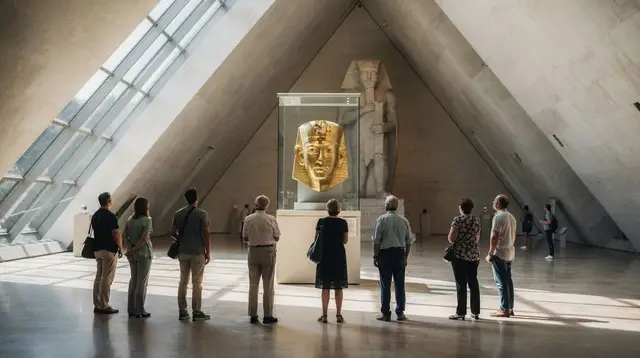
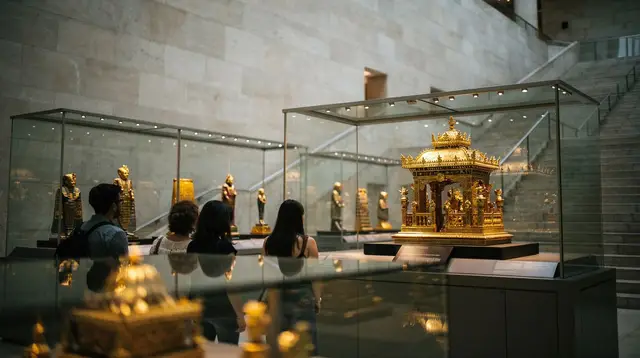
The Grand Egyptian Museum and the Egyptian Museum. Both museums hold enough material that pacing matters more than access. A guide who knows the GEM’s layout can prioritise the Tutankhamun collection and the galleries that matter most for the time available, rather than letting a first visit wander. The Egyptian Museum and NMEC tours guide covers the Tahrir museum and the royal mummies at the National Museum of Egyptian Civilization separately.
Where you probably don’t need one
Honesty cuts both ways. Some parts of a Cairo trip don’t benefit much from a paid guide, and it’s worth saying so plainly rather than upselling every stop.
A walk around Zamalek and the Nile corniche is one of them. It’s a residential, walkable district with cafés, galleries and river views, and there’s no dense historical sequence to interpret the way there is in Islamic Cairo. The Zamalek and the Nile corniche on foot guide is enough to plan that walk without a guide.
Khan el-Khalili as a shopping stop is a similar case: browsing and haggling in the bazaar is a hands-on experience that a guide can slow down more than help, unless you specifically want the historical layer of Al-Muizz Street alongside it. See how to haggle in Cairo if bargaining rather than history is the goal.
A felucca sunset sail on the Nile also doesn’t need historical narration to be worthwhile, and most operators don’t offer a guide for it anyway. Treat these as places to save the guide budget for the sites where it actually changes the visit.
Private guide, group tour, or self-guided: what actually differs
| Aspect | Self-guided | Group tour | Private guide |
|---|---|---|---|
| Pace | Entirely your own | Fixed, set by the group | Adjusts to your interests on the day |
| Historical depth | Whatever you read beforehand | Standard script, same for everyone | Tailored, can go deeper on request |
| Route flexibility | Full control, but you plan the logistics | Fixed itinerary, little room to change | Can rework the plan if traffic or hours shift |
| Best suited to | Zamalek, corniche walks, the bazaar for browsing | First-time visitors on a budget, simple sites | Saqqara, Islamic Cairo, Coptic Cairo, museum visits |
| Typical cost | Lowest | Mid-range, shared cost | Highest, but scales with group size |
A fuller comparison of the trade-offs between private and shared tours, including cost and group size, is in private vs group tours in Cairo. If the main driver is simply getting between sites efficiently rather than commentary along the way, a private driver without a guide is a separate, cheaper option covered in hiring a private driver in Cairo.
What to check before booking
A few practical points matter more than the marketing copy on any listing.
Private or shared. Some listings described as “guided tours” are actually small groups of unrelated travellers rather than a private booking. If a private guide is the point, confirm the listing says private, not just guided.
Hours and sites covered. A guide booked for a single attraction won’t cover Saqqara and Dahshur in the same session unless the listing says so. Multi-site days, like a Giza-plus-Saqqara combination, need a listing built for that scope, not a single-site booking stretched to fit.
Entrance tickets. Some private guide listings include site entrance fees, others don’t. This changes the effective price meaningfully, especially for a site like the GEM. Check the listing before comparing prices across operators.
Language and specialism. Most guides operate in English, but if you want a guide with a specific language or a particular focus, such as Coptic history over pharaonic history, it’s worth checking the listing description rather than assuming.
Comfort preferences. For solo travellers, particularly women, a female guide is available for some museum bookings specifically. It’s a comfort choice, not a requirement, and worth deciding in advance if it matters to you.
Booking a guide through GetYourGuide or Viator
Both GetYourGuide and Viator list private and small-group Egyptologist-led tours in Cairo, sorted by site or by a chosen attraction of your choice. For a single site visited with full flexibility, a private guided tour built around whichever site you pick lets you set the focus yourself rather than following a fixed script. For the Egyptian Museum specifically, an Egyptian Museum private guided tour covers the Tahrir collection with a dedicated guide, and a female-led private museum tour is listed separately for travellers who prefer that option. For a trip that stretches across two days rather than a single site, a two-day highlights tour with a guide spreads Giza, Islamic Cairo or a museum visit across separate days instead of cramming everything into one.
Whichever listing you choose, treat the price shown as an order of magnitude rather than a fixed figure, and check the current rate and inclusions on the booking page itself before confirming.
Frequently asked questions about hiring an Egyptologist guide in Cairo
Do I need an Egyptologist guide to visit the Giza Pyramids?
No, the plateau is walkable on your own and the pyramids of Khufu, Khafre and Menkaure plus the Great Sphinx are easy to find without help. A guide adds value by explaining the construction history and by managing the persistent touts and photo-op sellers around the site, not by unlocking access.
Is a private guide worth it for Saqqara?
More so than at Giza. Saqqara spreads several distinct monuments, including the Step Pyramid of Djoser, across a site with far less signage for visitors, and a guide who also covers Dahshur and Memphis in the same day saves real time by sequencing the stops and briefing the driver.
Can a guide make the Grand Egyptian Museum visit better?
Yes, mainly by pacing. The GEM is large enough that a first-time visitor can spend a full day without seeing the Tutankhamun collection properly, and a guide who knows the layout helps prioritise galleries against the time you actually have.
Do I need a guide for Islamic Cairo?
This is one of the areas where a guide changes the visit the most. The Citadel of Saladin, Al-Azhar, Khan el-Khalili and Al-Muizz Street sit close together but their history spans several centuries and dynasties that are hard to piece together from signage alone.
Is a guide necessary for a walk around Zamalek?
No. Zamalek and the Nile corniche are residential and easy to explore independently on foot, with no dense historical sequence to interpret. This is a case where paying for a guide adds cost without adding much to the experience.
How is a private guide different from a group tour guide?
A group tour guide speaks to everyone at once and keeps to a fixed script and schedule. A private guide adjusts pace and depth to your own interests, spends less time waiting for the group to regroup, and can rework the itinerary on the day if traffic or opening hours change.
Should I hire a female guide for the Egyptian Museum?
Some visitors, particularly solo women, prefer it, and female-guided options exist for the Egyptian Museum specifically. It is a personal comfort choice rather than a requirement for accessing the museum or its collection.
How do I book a private Egyptologist guide in Cairo?
Through GetYourGuide or Viator, where private and small-group guided tours are listed by site or by chosen attraction. Check whether the listing is private or shared, how many hours it covers, and whether entrance tickets are included before booking.
Private Egyptologist-guided Cairo tours on GetYourGuide
Verified deep-linked GetYourGuide tours. Book through these links and we earn a small commission at no cost to you.
GetYourGuide does not provide a product photo for this activity — the image shows the meeting point, photographed by us.