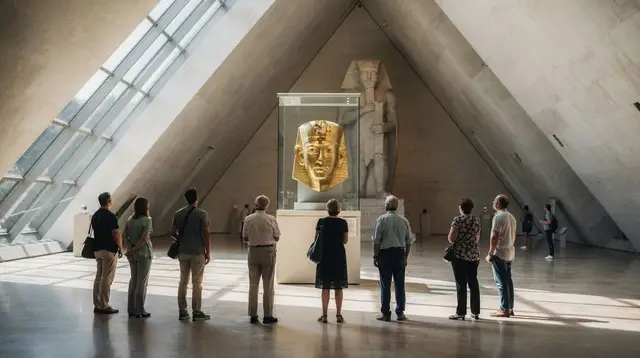
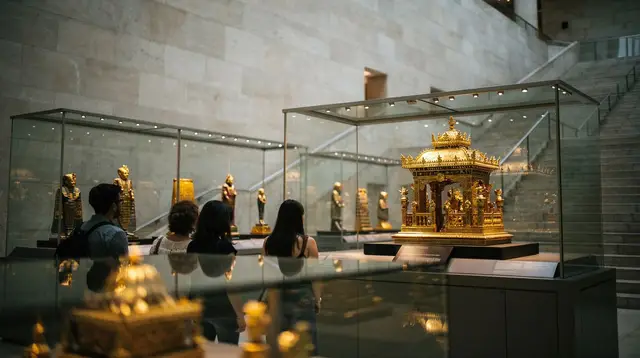
Things to do in Aswan and Abu Simbel
What is there to do in Aswan and Abu Simbel?
Aswan centres on the High Dam, Philae Temple, the Unfinished Obelisk and Nubian villages along the Nile, usually reached from Cairo by flight or overnight sleeper train, or by Nile cruise from Luxor. Abu Simbel sits further south again and is normally added as a day extension from Aswan rather than a separate trip from Cairo.
Aswan is the far end of the same trip, not a side trip from Cairo
If you have already read the Luxor guide, you know the basics of how this part of Egypt is reached from Cairo: by internal flight or by overnight sleeper train, never as a day out in a car. Aswan sits further south again, and this page does not repeat that routing decision in detail — the flight-versus-train comparison and the practical booking notes live on the Luxor page, since travellers typically decide on transport for the whole southern leg at once, not separately for each stop.
What matters here is what Aswan itself offers, how it differs in character from Luxor, and where Abu Simbel fits — because a lot of first-time visitors assume Abu Simbel is either part of Aswan or reachable directly from Cairo, and neither is true.
Aswan and Abu Simbel are almost always sold from Cairo as multi-day packages — flight out, time on the ground, flight or cruise back — rather than as a single excursion. Treat this leg as its own short trip layered onto a Cairo base, not an afternoon add-on.
a two-day, one-night travel package to Aswan and Luxor is a common way this leg gets sold, bundling the flights or transfers with a set list of sites so you are not piecing the logistics together yourself.
What makes Aswan different from Luxor
Luxor is dense with monuments: the Karnak and Luxor temple complexes, the Valley of the Kings, the Valley of the Queens, temple after temple on both banks. Aswan is a different rhythm. It is smaller, the pace is slower, and a lot of what makes it worth visiting is the setting itself — the Nile narrows and clears here, granite outcrops break the surface, and the town has a distinctly Nubian character that Luxor does not share.
Practically, that means an Aswan itinerary has fewer must-see sites but more time on and around the water. Felucca sailing, which is also offered in Cairo in the evenings, takes on a different feel here, gliding between Elephantine Island and the Nubian villages on the west bank with none of the traffic noise of the capital.
The core sites in Aswan
The High Dam. Built across the Nile south of the city, completed in the 1970s, it created Lake Nasser and reshaped how the river floods every year in Egypt. The visit itself is brief — an overlook and some background on the engineering — but it explains why several ancient sites, including Abu Simbel, were physically relocated before the dam was finished.
Philae Temple. Dedicated to the goddess Isis, the temple complex was moved to Agilkia Island after the original site was flooded by the dam. Reaching it means a short motorboat crossing, which adds a bit of time and a small extra cost beyond a straightforward temple ticket, but most visitors consider it one of the better-preserved and more atmospheric sites in the Aswan area.
The Unfinished Obelisk. Still attached to the bedrock in an ancient granite quarry, this obelisk was abandoned partway through carving after cracks appeared in the stone. It is one of the clearest places in Egypt to see how these monuments were actually cut, and it is a quick, low-effort stop compared with a full temple visit.
Nubian villages and Elephantine Island. The west bank and the river islands around Aswan are home to Nubian communities with their own language, textiles and house-painting traditions, distinct from the rest of Egypt. A felucca crossing to a Nubian village, often combined with tea or a meal in someone’s home, is a common half-day activity and a change of pace from monument-heavy sightseeing.
The Aswan Souq. A working market street rather than a tourist bazaar built for visitors, closer in spirit to a local shopping street than to Khan el-Khalili in Cairo. Spices, textiles and everyday goods rather than curated souvenirs.
Table: Aswan sites at a glance
| Site | What it is | Typical time needed |
|---|---|---|
| High Dam | Engineering overlook, Lake Nasser views | Under an hour |
| Philae Temple | Isis temple complex, reached by boat | Half a morning or afternoon |
| Unfinished Obelisk | Ancient granite quarry, abandoned obelisk | Under an hour |
| Nubian village visit | Felucca crossing, village walk, tea or meal | Half a day |
| Aswan Souq | Local market street | An hour or so, flexible |
| Abu Simbel | Two rock temples, further south | A full day round trip |
Durations here are for planning shape, not fixed schedules — actual pacing depends on the season, the heat, and whether sites are grouped into a private-driver day or a set group itinerary.
Abu Simbel: further south again, usually an extension
Abu Simbel is not in Aswan. It sits considerably further south, near the border with Sudan, and reaching it is its own leg on top of the Cairo-to-Aswan journey. Most visitors add it as a day extension from Aswan — either an early-morning flight down and back, or a long road convoy — rather than treating it as a stop along the way.
The site itself is the pair of rock-cut temples built under Ramesses II, relocated in a well-known engineering effort during the 1960s to save them from the rising waters of Lake Nasser, the same project that moved Philae. The scale of the facades, and the fact that they were physically cut apart and reassembled higher up the cliff, is most of what people come away remembering.
Because it is an extension rather than a core stop, decide on Abu Simbel separately from the rest of the Aswan itinerary: some Cairo-origin multi-day packages include it, others leave it as an optional add-on once you are already in Aswan. Confirm which applies before assuming it is covered.
Linking Luxor and Aswan by Nile cruise
Rather than flying or taking the train twice — once down to Luxor, again onward to Aswan — a Nile cruise is a common way to connect the two legs. Cruises typically run in either direction between Luxor and Aswan over several nights, stopping at temple sites along the riverbank on the way, so the transfer between the two cities becomes part of the itinerary rather than dead time.
a three-night Nile cruise from Aswan to Luxor covers this exact link, and a four-day Nile cruise to Aswan that also includes a hot air balloon flight over Luxor combines the river crossing with the balloon flight that only operates over Luxor’s west bank, not over Aswan or Cairo.
For travellers planning the whole southern leg from scratch, a longer package built from Cairo can bundle the flights, the Aswan and Luxor sightseeing, and the cruise link into one booking. an eight-day, seven-night package covering the pyramids, Luxor and Aswan by air and a nine-day Egypt tour taking in Cairo, the pyramids, Luxor, Aswan and a Nile cruise are both built around this shape: a Cairo base, a flight south, and the river filling in the gap between Luxor and Aswan.
Whether a cruise, a flight, or the sleeper train makes more sense for any one leg depends on how much time is available for the whole trip and how much time on the water actually appeals — a cruise adds days that a direct flight would save, in exchange for a slower, more scenic transfer.
Timing this leg honestly
Aswan and Abu Simbel add real days to a Cairo-based trip, not hours. Once flights or the overnight train, time on the ground in Aswan, and possibly a Luxor link or Abu Simbel extension are all accounted for, this becomes a multi-day trip within the wider Egypt trip, not a stop that fits neatly into a Cairo itinerary alongside Giza and Saqqara. There is no fixed total travel time worth quoting here, since it depends entirely on which combination of flight, train and cruise is chosen — but nobody should plan this leg expecting to be back in a Cairo hotel the same night.
Heat is a real factor for outdoor sites like the Unfinished Obelisk quarry and the High Dam overlook, more so in Aswan than further north since the city sits deeper in the desert. Visiting these exposed sites earlier in the day, and saving Philae’s shaded interior halls for the warmer hours, is a reasonable way to sequence a day here.
What to skip or reconsider
Not every optional add-on around Aswan earns its place on a short visit. A second felucca outing on top of the Nubian village crossing is often redundant if time is tight — one Nile sailing covers the experience. Overly long souvenir stops built into group itineraries, particularly perfume or papyrus demonstrations positioned as quick errands, can eat into time better spent at Philae or on the water. If Abu Simbel is being added as an early-morning return flight, treat that day as effectively spoken for and avoid stacking more Aswan sightseeing onto the same morning.
Planning the wider trip
Because this leg only makes sense as part of a longer southern Egypt trip, it is worth looking at it alongside the full route rather than in isolation. The itineraries for Cairo and Luxor in five days, one week covering Cairo, Luxor and Aswan, and a six-day luxury Cairo and Nile itinerary all show how Aswan and Abu Simbel fit against a Cairo base, with different amounts of time on the river.
For the wider destination context, see the Aswan destination page and the upper Egypt region overview, and for things to do at the previous stop on the same route, the Luxor activities guide and Luxor trips from Cairo cover that leg in full. General multi-day tours from Cairo that bundle Aswan in with the rest of Egypt are also worth comparing against booking each leg separately.
Before travelling this far south, the same entry and money basics that apply to the rest of the trip still apply here: check Egypt visa and entry rules if this hasn’t been sorted already, and see money, cards and ATMs in Cairo for how cash and cards work across Egypt generally, since Aswan and Abu Simbel are more cash-reliant than central Cairo. For the Abu Simbel extension specifically, Abu Simbel from Cairo covers that add-on leg in more detail, and the Aswan things-to-do hub lists bookable activities in the area beyond what’s covered here.
Aswan and Abu Simbel: questions worth asking before booking
Can I visit Aswan as a day trip from Cairo?
No. Aswan is reached from Cairo by internal flight or overnight sleeper train, or by Nile cruise from Luxor. There is no realistic same-day return from Cairo by road.
How is Aswan different from Luxor?
Luxor covers the temple and tomb complexes of ancient Thebes on both riverbanks. Aswan is further south, calmer, and built around the Nile itself: the High Dam, Philae Temple on its island, granite quarries, and Nubian riverside villages.
Is Abu Simbel part of Aswan?
No, Abu Simbel is a separate site well south of Aswan, close to the Sudanese border. It is normally visited as a day extension or add-on excursion from Aswan, not bundled automatically into every Aswan stay.
Should I fly to Aswan or take the sleeper train?
Both are used; the choice usually follows whichever routing is already set for the Luxor leg of the same trip, since flight and train options for this route are covered on the Luxor page rather than repeated here.
Can I combine Luxor and Aswan without flying twice?
Yes, a Nile cruise between Luxor and Aswan is a common way to link the two stops, replacing one of the flight or train legs with several days on the river.
What is the Unfinished Obelisk?
A partly carved granite obelisk still attached to bedrock in an ancient quarry at Aswan, abandoned after cracks appeared. It shows ancient quarrying methods more clearly than any finished monument.
Is Philae Temple worth the extra boat crossing?
Most visitors find it worthwhile. Philae sits on an island reached by a short motorboat ride, and the temple complex dedicated to Isis is one of the better-preserved sites in the Aswan area.
Cairo trip planning and itinerary tours on GetYourGuide
Verified deep-linked GetYourGuide tours. Book through these links and we earn a small commission at no cost to you.
GetYourGuide does not provide a product photo for this activity — the image shows the meeting point, photographed by us.