Why Aswan is not a day trip from Cairo
Most of what fills a Cairo itinerary — Giza, Saqqara, Islamic Cairo — sits within an hour or two of a Cairo or Giza hotel. Aswan does not. It lies far up the Nile in the south of the country, and the only realistic ways to get there are a domestic flight of roughly an hour or an overnight sleeper train. There is no honest version of “drive down for the day and come back.” If a tour or a listing implies otherwise, treat that as a red flag rather than a shortcut.
Abu Simbel adds a further complication. It sits south of Aswan again, close to the border with Sudan, and is reached from Aswan by a short flight or an early road transfer, often run as a convoy departure. That means a visit to Abu Simbel is really a second leg tacked onto an Aswan stay, not a single connection from Cairo. Anyone planning around “Cairo to Abu Simbel” without stopping to think about Aswan as the intermediate step is underestimating the trip.
This page treats Aswan and Abu Simbel as what they are on the ground: the furthest extension of a Cairo-based holiday, reached by flight or night train, worth planning as its own multi-day block rather than squeezing in around a Giza pyramids tour or a Saqqara half-day.
A useful way to picture the difference: Alexandria is a return trip inside a single day, with the road time bracketing a few hours on the ground. Aswan is the opposite shape — the travel itself consumes a chunk of a full day (checking out of a Cairo hotel, reaching the airport or station, the journey south, checking into an Aswan hotel), and everything you actually see there happens on a separate calendar day again. Planning it the way you would plan Alexandria — squeezed into a spare afternoon — is the single most common mistake in itineraries pieced together without a local reference point.
Flight or sleeper train: the real choice
Two options get you from Cairo to Aswan, and the choice matters more than most guides let on.
Flying is the straightforward option. It is the fastest way to cover the distance, and combined with an Abu Simbel flight from Aswan it lets you see both sites inside a shorter window. The trade-off is a normal set of airport routines twice over — check-in, security, baggage — on top of whatever you already went through arriving into Cairo International Airport (CAI).
The sleeper train runs overnight, so in principle it saves a hotel night while covering the distance. It has real appeal if you like the idea of watching Egypt go past a train window rather than a security queue, and it removes a same-day connection between a Cairo hotel and the airport. Set expectations carefully, though: cabin standards, punctuality and comfort vary between runs, and it should be booked as a deliberate choice rather than assumed to be equivalent to flying.
Neither option is wrong. What is wrong is treating either one as instant. Add the connection time at both ends — to the airport or station, through check-in, to your Aswan hotel — and the “quick hop south” some listings imply stops looking quick. Build a buffer day either side if your onward plans are tight, particularly if you are also connecting to or from Luxor.
What an Aswan and Abu Simbel extension actually looks like
There is no single template, but three shapes come up repeatedly in packages sold from Cairo.
A short Aswan-and-Abu-Simbel add-on. Fly down, spend a night or two in Aswan, add the Abu Simbel leg, fly back to Cairo. This suits travellers whose main interest is Abu Simbel itself and who are not trying to also cover Luxor in the same trip.
A Nile cruise between Luxor and Aswan. Rather than flying directly to Aswan, you fly or train to Luxor first, then cruise down the Nile to Aswan over several days, stopping at temple sites along the way, before flying home from Aswan or heading back north. This is the option most multi-day Egypt packages from Cairo are built around, since it covers Luxor and Aswan together without repeated hotel changes.
A longer Upper Egypt loop. Cairo and Giza first, then a flight to Luxor, temples and the Valley of the Kings there, onward to Aswan by cruise or short flight, and finally Abu Simbel as the southernmost stop before flying back to Cairo. This is the shape behind most of the week-plus packages sold as complete Egypt tours.
Whichever shape you choose, none of it compresses into a day trip from a Cairo or Giza hotel room. Treat Aswan and Abu Simbel as a distinct chapter of the holiday, with its own packing, its own hotel or cruise cabin, and its own pace — separate from the day-trip logic that governs Alexandria or Ain Sokhna.
What catches first-time visitors off guard
Abu Simbel’s early transfers are earlier than most travellers expect: convoy departures and pre-dawn flights exist because the site sits far enough from Aswan that a comfortable midday visit is not really on offer. Anyone hoping to ease into the day should plan for a short night’s sleep rather than a leisurely breakfast beforehand.
The road route south from Aswan passes through a security-checked corridor, with convoys grouped for the crossing — a normal part of travel in this part of the country, but a surprise to visitors who assumed Egypt’s interior moves the way Cairo’s streets do. It adds waiting time that is easy to leave out of a plan built purely around flight or drive duration.
Lake Nasser’s shoreline offers little natural shade, and the open courtyard in front of the Abu Simbel temples gets hot quickly once the sun is up, even outside the summer months. Visitors who arrive expecting a quick look at the facades and a shaded rest afterward are often disappointed; there is comparatively little cover on site.
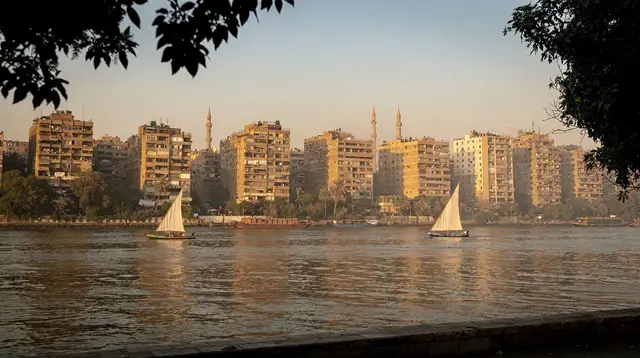
Nile cruise stops can also feel crowded in a way that surprises people who picture Aswan as remote and quiet. Several ships often dock and disembark passengers at the same temple sites within the same hour, and a felucca sail advertised as tranquil can mean sharing the river with several other boats doing the same thing at sunset.
Getting into and around Aswan
Aswan’s airport sits a drive away from the town centre and the main hotel strip along the Nile, so factor in a transfer on arrival much as you would at Cairo International Airport (CAI) — this is not a walk-in destination. Most hotels and cruise operators arrange the pickup as part of the package; travellers arranging flights independently should confirm a transfer is included or book one ahead rather than expecting to find a taxi rank set up the way Cairo’s is.
Mobility around the temple sites is a genuine consideration. Ground at Abu Simbel and around the Aswan temples is often uneven sand and stone, with limited shade and few paved paths, and older Nile cruise boats do not always have lifts between decks. Travellers with mobility needs are better served asking a tour operator directly about a specific ship or itinerary than assuming standard accessibility, since it varies far more here than it does on a short Giza pyramids visit.
Booking the extension from Cairo
Most travellers book Aswan and Abu Simbel as part of a longer package departing Cairo, rather than arranging flights and hotels piece by piece. A multi-day tour bundling Cairo, Luxor and Aswan removes a lot of the coordination — internal flights, transfers, guiding at each stop — and is worth comparing against a self-arranged version even if it costs more, simply for the time saved.
a nine-day route covering the Cairo pyramids, Luxor and Aswan with a Nile cruise built in is the kind of package that removes most of the logistics described above in one booking. For travellers who want the cruise segment specifically, a five-day Nile cruise to Aswan with flights included covers the Luxor-to-Aswan stretch without requiring a longer overall trip. A broader option, a nine-day tour combining the pyramids, Alexandria, Luxor and a Nile cruise, works if you also want to fold in a day trip to Alexandria before heading south. Because these extensions start from a Cairo or Giza base, it is worth confirming your Cairo-area sightseeing first — a private tour of the Grand Egyptian Museum is a common way to fill the days immediately before or after flying south.
For travellers weighing a private Nile cruise cabin against a fixed-departure group cruise, the trade-off is similar to choosing between private and group tours around Cairo: a private cabin costs more but sets its own pace, while a fixed departure is cheaper and simpler to book but runs to someone else’s schedule. Neither is wrong, but decide before comparing prices, since the two options are not really substitutes for each other.
As with any package, prices vary by season, cabin category and what is bundled in, so treat any figure you see as a starting point and check the current listing on GetYourGuide or Viator for the actual fare before booking.
Aswan itself: what fills the time there
Beyond serving as the gateway to Abu Simbel, Aswan has its own sights worth the extra days: temples on and around Lake Nasser, felucca sailing on a calmer stretch of the Nile than Cairo’s, and a slower pace generally than the capital. Read things to do in Aswan for the detail once you are planning the days on the ground rather than the logistics of getting there.
Abu Simbel: the furthest point south
Abu Simbel’s two rock-cut temples, built under Ramesses II and dedicated in part to Nefertari, sit close to the border with Sudan and are among the most recognisable ancient monuments in Egypt after the Giza pyramids. Getting there means adding a leg onto an Aswan stay — a short flight or an early road transfer — rather than a stop you fold into a day already busy with Aswan sightseeing. For a closer look at what the visit involves once you have committed to the extension, see Abu Simbel from Cairo.
How this compares to Luxor
Luxor and Aswan are frequently sold together, and for good reason: a cruise or a shared flight route links them naturally, and most travellers doing one do the other. But they are not interchangeable stops. Luxor centres on the Valley of the Kings and the temple complexes on the Nile’s east and west banks; Aswan centres on Lake Nasser, Nubian culture and the approach to Abu Simbel. If you are deciding how to split limited time between them, Luxor trips from Cairo and Nile cruise vs Luxor hotel stay lay out the trade-offs in more detail than this page can.
Getting the flight-versus-train decision right
If your schedule allows either option, a few practical points tend to decide it. Travellers prioritising a full day of sightseeing on arrival lean toward flying, since it removes the unpredictability of overnight rail. Travellers who value the experience of the journey itself, or who want to save a hotel night, lean toward the sleeper train. For a side-by-side comparison written specifically for this route, see Cairo to Luxor by flight vs sleeper train — the same trade-offs apply broadly to Aswan.
Whichever you choose, do not schedule anything demanding for the morning you arrive. Overnight trains can run late, and even a smooth flight still leaves you at an airport some distance from your hotel, on top of whatever Cairo traffic you already navigated to reach CAI in the first place.
Practical notes for the extension
Currency, language and general etiquette carry over from Cairo: the Egyptian pound (EGP) is the currency throughout, cash is useful for tipping and small purchases, and cards work at hotels and larger restaurants. Dress and behaviour expectations at temple sites are broadly similar to those at mosques and churches in Cairo — modest, respectful, and mindful that these are active heritage sites, not backdrops.
Heat is a bigger factor in Aswan and at Abu Simbel than in Cairo for much of the year; the same October-to-April guidance that applies to the capital applies here, and summer visits benefit from an early start at open-air sites. If your trip falls during Ramadan, expect the same shifted opening hours and pace you would see in Cairo — see visiting Cairo during Ramadan for what that generally means for sightseeing timing, even though that guide is written for the capital.
A few more practical questions
Is Wi-Fi and mobile signal reliable in Aswan and at Abu Simbel?
Aswan town has decent mobile coverage and most hotels offer Wi-Fi, similar to Cairo. Abu Simbel itself, given its remoteness near the Sudanese border, has patchier signal, so treat the site visit as a screen-free stretch rather than counting on connectivity throughout.
Can travellers with mobility limitations visit Aswan and Abu Simbel comfortably?
It takes more planning than Cairo and Giza. Ground at the temple sites is uneven with little shade, and older Nile cruise boats may lack lifts between decks. Ask a tour operator directly about a specific ship or itinerary rather than assuming standard accessibility.
Deciding whether to add Aswan and Abu Simbel
If your trip to Egypt is built around Cairo, Giza and perhaps Saqqara or Alexandria, adding Aswan and Abu Simbel is a genuine extension, not a tweak to the itinerary. It costs extra days, an internal flight or a night on a train, and — for Abu Simbel — a further leg south again. Weigh that honestly against what else those days could buy: more time in Islamic Cairo, a proper look at the Grand Egyptian Museum, or a Red Sea stop closer to the capital. For travellers with the time, Aswan and Abu Simbel are usually judged worth the trip; for those without it, they are better saved for a return visit than rushed.