Tunis village pottery in the Fayoum
Is the Tunis pottery village in the Fayoum worth visiting?
Tunis is worth a stop of an hour or two as part of a wider Fayoum day trip from Cairo, not as a destination on its own. Most visitors combine it with Wadi El Rayan's lakes and waterfalls or Wadi Al-Hitan's fossil valley on the same outing.
A craft stop inside a bigger Fayoum day
Tunis is a small village on the edge of Lake Qarun, in the Fayoum, and it has built a reputation around pottery. A cluster of studios, most of them family-run, turn out hand-thrown and hand-painted ceramics, and several are set up for visitors to watch the work or try it themselves. That reputation is real, but it is worth being clear about what Tunis is and is not. It is not a reason on its own to book a day away from Cairo. It is a good stop inside a day that is already built around the Fayoum’s other draws: the lakes and cascades of Wadi El Rayan and the fossil valley at Wadi Al-Hitan. Both of those get covered in their own guides for the natural and geological side of the trip; this page is about the village and the workshops, and about where a stop in Tunis fits into that day.
Anyone staying in Cairo or Giza and weighing a Fayoum excursion should think of Tunis as one stop of several, not the headline.
Getting there and what the road trip actually costs you
The Fayoum sits southwest of Cairo, and the honest way to describe the drive is by comparison rather than by an exact figure, because traffic leaving greater Cairo varies too much for a fixed number to be useful. It runs longer than the short hop out to the Giza pyramids and shorter than the drive to Alexandria. In practice that means a Fayoum day trip, Tunis included, is a full day out rather than a half-day errand: departure early morning, most of the day spent in the Fayoum, and a return in time for dinner back in Cairo. See Cairo traffic and realistic travel times for how to plan around the city’s exit routes before you even reach the desert road.
Because the drive eats a real chunk of the day, tacking Tunis onto a wider Fayoum itinerary is the sensible way to justify the trip. A private driver or a booked Fayoum day tour is the practical way to link the village with the lakes and the fossil valley without doubling back on yourself. Public transport into the Fayoum’s back roads exists but is not built for a single-day loop that also needs to hit two or three separate sites, so most visitors who value their time book a driver or a tour rather than piece the route together themselves.
Season and time of day both change how the drive and the stop feel. Between roughly October and April, daytime temperatures in the Fayoum are manageable for walking between studios at any point in the day, and mornings and evenings can be cool enough for a jacket. From June to August, the desert road and the village itself get genuinely hot by midday, often above 35°C, and a pottery stop scheduled for early afternoon is a less pleasant version of the same visit than one scheduled for the first hour after arrival.
Operators running a Fayoum day trip in summer typically front-load the itinerary, starting at Tunis or the lakes before the heat builds rather than saving either for the afternoon. Friday, the weekly day of rest, can also mean quieter roads out of Cairo but fewer people working in some studios, so a weekday visit is marginally more reliable if watching potters at the wheel is the point of the stop.
What the village and the workshops are actually like
Tunis is small: a strip of studios and a scatter of houses, most of it walkable. The point of visiting is the craft itself. Potters here work with local clay and produce everything from functional tableware to decorative pieces, a lot of it painted with motifs drawn from the Fayoum itself — birds, fish, and the lake. Several studios are set up to let visitors watch a potter throw a piece on the wheel, and some offer a hands-on session, whether that is painting a blank piece or trying the wheel with guidance.
This is not a museum stop with fixed hours and a ticket booth; it is a working village, and what is open or busy on a given day depends on the potters themselves. Expect a relaxed pace: walking between two or three studios, watching work in progress, and browsing finished pieces for sale. It suits a traveller who wants to see a craft practised in the place it comes from, rather than one looking for a headline attraction with a queue and a viewing platform.
If a hands-on session is the draw, it is worth booking one in advance as part of a Fayoum day rather than hoping to find a workshop with space on the day. A pottery painting session in Cairo or a hand-building pottery workshop with snacks and drinks included gives a more structured version of the same craft, useful for travellers who want the pottery experience but cannot fit the full Fayoum day into their schedule.
The village itself has no formal accessibility infrastructure: paths between studios are often unpaved or uneven, and thresholds into workshops are not built with step-free access in mind. Visitors with limited mobility can still see and buy from some studios, but it is worth asking a private driver or tour operator ahead of time which workshops are easiest to reach, rather than assuming the whole village is walkable for everyone.
Buying pottery: what to expect
Finished ceramics are sold on site, mostly by the studios that made them. Painted bowls, plates, and small decorative pieces are the common items, and the Fayoum motifs — birds, water, boats — are a genuine local touch rather than a generic bazaar pattern. Quality and pricing vary between workshops, so it is worth walking a couple of studios rather than buying at the first stall. No price is fixed and none should be quoted as one here; carry cash in Egyptian pounds, since small workshops in a village are not set up for cards, and factor in a reasonable amount of back-and-forth on price, as is normal at Khan el-Khalili and most other craft or souvenir purchases in Egypt — see how to haggle in Cairo for the general approach, which applies here too.
Fragile purchases need padding for the drive back and for the rest of any trip that continues beyond Cairo, so buy with your suitcase in mind.
Where Tunis fits in a Fayoum day
A workable Fayoum day from Cairo generally combines two or three stops, and Tunis is the compact one. A common pattern: an early departure, a first stop at the lakes and waterfalls of Wadi El Rayan, time in Tunis for the pottery in the early or late afternoon when the light and the heat are easier, and a look at the fossils of Wadi Al-Hitan if the itinerary allows for it — that site involves more time and a longer stretch off paved road, so some day trips choose between it and Tunis rather than fitting in both alongside the lakes. The village of Tunis potters works well as a lower-effort stop bookending a day built around the more demanding natural sites, since it needs no hiking and no set-piece viewpoint, just time to walk and browse.
Anyone assembling their own route rather than booking a packaged tour should treat Tunis as flexible: it can be the first stop of the day before the heat builds, or a wind-down before the drive back to Cairo. It should not be treated as the anchor that the rest of the day is built around.
If you only have half a day in the Fayoum
Not every visitor has a full day to give the Fayoum, and a half-day out of Cairo means the drive alone eats a large share of the time available. In that case, the choice is usually between Tunis and Wadi El Rayan, not all three stops. Wadi El Rayan gives a bigger, more photogenic payoff for the time spent — lakes, a waterfall, and open desert scenery — and is the better use of a half-day for a first-time visitor who has not been to the Fayoum before. Tunis rewards a slower visit and works better once the natural sites are already covered, or for a traveller who specifically wants the craft angle over the scenery. Wadi Al-Hitan is the one to drop first on a half-day, since it sits furthest into the desert and needs the most time on unpaved tracks relative to what it adds for a visitor who is not particularly drawn to fossils or geology.
What can disappoint
Two things catch some visitors off guard. First, the scale: Tunis is genuinely small, and a visitor expecting a large craft market or a long row of stalls will find a handful of studios instead, which some travellers cover in well under an hour. Second, the unpredictability: because there is no central booking system or fixed opening schedule, which studios are actively working, and which potters are available to demonstrate or teach a session, varies day to day. A visitor arriving without a pre-booked workshop session can sometimes find the potter they hoped to watch is out, or that a hands-on session is not available that day. Booking a structured pottery session in advance, or going as part of a tour that has an existing relationship with specific studios, removes most of that uncertainty.
Is it worth the stop?
For a traveller already committed to a Fayoum day trip, yes: an hour or two in Tunis is a reasonable, low-effort addition that adds a craft element to a day otherwise focused on lakes and geology, and buying directly from the potters who made a piece is a more grounded souvenir than most options in central Cairo. For a traveller weighing a special trip out to the Fayoum purely to see a pottery village, the honest answer is that the drive is a lot to spend on a stop this size on its own. It earns its place as part of a longer day trip from Cairo, not as the reason for one.
Frequently asked questions about Tunis village pottery in the Fayoum
Can you visit Tunis village as a standalone day trip from Cairo?
It is possible, but most drivers and tour operators combine it with other Fayoum stops such as Wadi El Rayan, since the road out to the Fayoum takes a meaningful chunk of the day on its own.
How far is Tunis village from Cairo?
It sits inside the Fayoum, a road trip from Cairo that runs longer than the short run out to Giza but shorter than the drive to Alexandria. There is no fixed travel time; it depends on traffic leaving greater Cairo.
What do you actually do at the Tunis pottery village?
Visitors walk between small studios and workshops, watch potters throw and hand-build pieces, and can usually try a wheel or a painting session themselves. Finished ceramics, often painted with Fayoum lake and bird motifs, are sold on site.
Is Tunis village the same as Tunisia?
No. Tunis is a small village on the edge of Lake Qarun in Egypt’s Fayoum region, named independently of the North African country and unrelated to it.
Should you combine Tunis with Wadi El Rayan or Wadi Al-Hitan?
Yes. Tunis works best as a craft stop bookending a Fayoum day built around Wadi El Rayan’s lakes and waterfalls or the Wadi Al-Hitan fossil valley, both a further drive into the Fayoum.
Do you need a guide or driver to reach Tunis village?
A private driver or a booked Fayoum day tour is the practical way to link Tunis with the lakes and desert stops in one day; public transport options into the Fayoum’s back roads are limited.
Is pottery from Tunis village worth buying?
The hand-painted pieces are a reasonable, portable souvenir tied to a specific place rather than a generic bazaar item, but prices and quality vary by workshop, so it is worth comparing a few stalls before buying.
What season is best for visiting Tunis village and the wider Fayoum?
The cooler months from roughly October to April are more comfortable for a full Fayoum day, including walking between studios in Tunis. In June to August, the Fayoum gets very hot by midday, so an early stop in the village before moving on to the lakes works better than doing it in the afternoon heat.
Is the Tunis pottery village accessible for visitors with mobility issues?
The village has unpaved and uneven ground in places, with no formal accessibility infrastructure, so wheelchair or limited-mobility visitors should expect a village experience rather than a paved, purpose-built attraction. Checking with a private driver or tour operator about specific studios’ step-free access before booking is worth doing.
Fayoum oasis and Wadi Rayan tours on GetYourGuide
Verified deep-linked GetYourGuide tours. Book through these links and we earn a small commission at no cost to you.
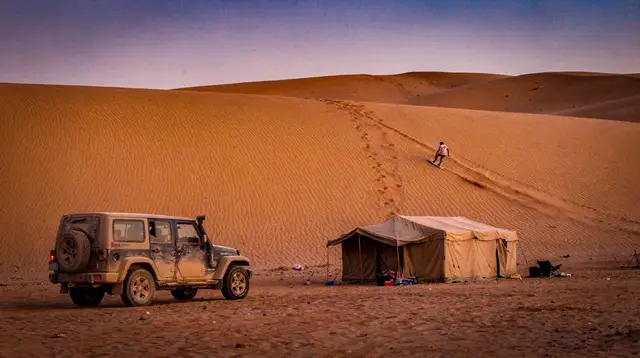
GetYourGuide does not provide a product photo for this activity — the image shows the meeting point, photographed by us.