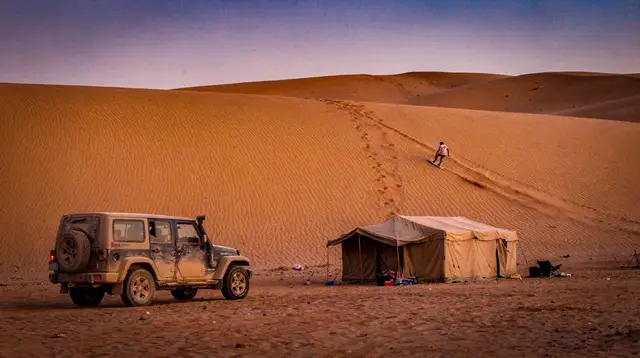
Wadi El Rayan: lakes and waterfalls in the Fayoum desert
What is Wadi El Rayan and is it worth visiting from Cairo?
Wadi El Rayan is a protected area in the Fayoum depression with two connected lakes and Egypt's only waterfalls, set against open desert. It is a full-day trip from Cairo or Giza, often paired with the fossil site of Wadi Al-Hitan, and rewards visitors who want scenery and quiet rather than monuments.
Two lakes, a waterfall, and the desert around them
Wadi El Rayan is a protected depression in the Fayoum region, built around two lakes connected by a channel where the water drops just enough to form Egypt’s only waterfalls. It is not a single viewpoint you tick off in ten minutes. It is a landscape: pale desert running down to still water, reed edges where birds gather, and a horizon that has nothing in common with the density of central Cairo or the crowds at the Giza plateau. If you have spent a few days moving between the pyramids, Islamic Cairo, and Nile-side traffic, this is the kind of place that resets the pace of a trip rather than adding another monument to the list.
The area sits within the wider Fayoum depression, a natural basin fed historically by a channel off the Nile, which is why it supports lakes and cultivated land in the middle of otherwise dry desert. Wadi El Rayan itself is the water-and-landscape part of that story. A separate site further into the desert, Wadi Al-Hitan, the Valley of the Whales, holds fossil skeletons of early whales and is usually sold as part of the same day trip. They get bundled together on tour itineraries because they share a route, but they are different places with different appeal, and this page is about the lakes and waterfalls, not the fossils.
What you actually see and do here
The core of a Wadi El Rayan visit is the waterfall area between the two lakes. Do not expect anything close to a dramatic cascade — these are low, wide steps of moving water, a few metres of drop at most. Their value is contrast: after driving through flat desert, the sound and motion of water registers more than it would anywhere else. Around the falls, paths let you walk along the rock edge and look out over the lower lake, which spreads out toward more open desert to the south.
Boat trips on the lake are offered by some operators and give a different angle on the same landscape — water on one side, dunes on the other, with none of the noise of a city excursion. Depending on the season and the specific tour, some visits include time to swim at the lake, though this is not a given and conditions vary, so it is worth checking what is included before assuming it is part of your itinerary.
Beyond the water itself, the surrounding desert is part of the draw. Wadi El Rayan protected area extends well past the lakes, and operators running multi-stop desert trips sometimes combine a stop here with dune driving or a short 4x4 detour before continuing toward Wadi Al-Hitan or back toward Fayoum’s cultivated land. If your interest is landscape and quiet rather than a checklist of sights, this is where that shows.
How Wadi El Rayan compares to the rest of Fayoum
Fayoum as a region covers more than this one site. It includes cultivated land, older towns, and the pottery-making village of Tunis, in addition to the lakes and desert of Wadi El Rayan. If your day trip has flexibility, a short stop in Tunis village is a reasonable way to see a different side of the same sector — working pottery studios rather than open landscape — but it should be treated as an optional add-on, not the reason for the day. Adding it stretches an already long trip further, so weigh it against how much time you actually have.
The clearest distinction to keep straight is between Wadi El Rayan and Wadi Al-Hitan. They sit within the same broader desert area and are usually visited together, but Wadi El Rayan is about lakes, a waterfall, and open landscape, while Wadi Al-Hitan is a fossil site with whale skeletons exposed in the desert floor, recognised by UNESCO for that reason. Confusing the two, or expecting fossils at the lakes, sets up the wrong day. If fossils are your main interest, read the dedicated page on Wadi Al-Hitan before booking.
Travel time from Cairo or Giza — count it honestly
This is a full-day excursion, not a half-day one. Fayoum sits roughly two hours by road from a base in Cairo or Giza, and Wadi El Rayan itself lies further into the depression past the town of Fayoum City, which adds more driving once you are already in the region. Add stops at the waterfall area, time at the lake, and — if it is on your itinerary — the drive on to Wadi Al-Hitan or a stop in Tunis, and a realistic day runs from early morning to evening.
Cairo traffic getting out of the city adds variability at the start of the day, which is one reason most visitors book this as an organised tour with a driver who knows the route rather than attempting it independently. A private driver or an organised Fayoum oasis tour removes the guesswork of navigating unmarked desert tracks near the lake and coordinating the return leg after dark in winter.
| Trip element | Realistic time |
|---|---|
| Drive: Cairo/Giza to Fayoum | About 2 hours |
| Fayoum town to Wadi El Rayan | Additional 30–45 minutes |
| Time at the waterfalls and lake | 1–2 hours |
| Add-on to Wadi Al-Hitan | Further 45–60 minutes each way, off paved road |
| Return to Cairo/Giza | About 2 hours |
| Full day, lakes only | Roughly 6–7 hours round trip including stops |
| Full day, lakes plus Wadi Al-Hitan | Realistically a 9–10 hour day |
These are ranges, not fixed schedules — actual timing depends on your driver, the season, and how long you linger at the water. The point is to plan for a genuinely full day rather than squeezing this in as an afternoon extra.
Best time to go
Fayoum shares Cairo’s desert climate, so the same seasonal logic applies here as it does across things to do in Fayoum: cooler months, roughly October to April, are more comfortable for the amount of time you will spend outdoors walking along the lake edge and waterfall paths. Summer heat at Wadi El Rayan is more exposed than in the city, since there is little shade once you move away from the immediate water area, and afternoon temperatures regularly climb well past comfortable. If you do go in summer, an earlier start reduces the hours spent in direct sun. Bring water regardless of season — there is limited infrastructure once you are away from the main visitor area.
What to skip and what to expect honestly
Do not go expecting a large or powerful waterfall — the scale here is modest, and visitors who arrive with images of a major cascade in mind tend to be underwhelmed. The actual value is the landscape as a whole: still water against open desert, a quieter register than Giza or downtown Cairo, and a change of pace partway through a trip built mostly around monuments and traffic. If your schedule is tight and you are choosing between Wadi El Rayan and other Fayoum stops, decide based on whether landscape and quiet appeal to you more than fossils, pottery, or another activity — they are genuinely different experiences packaged under the same regional label.
Because this is a protected desert area with limited facilities, do not expect posted opening hours or fixed entry pricing to be reliable if you find them listed somewhere online — check current terms through whichever operator you book with rather than treating any number you see as fixed.
Booking a trip out here
Given the distance and the unpaved stretches involved, most visitors book this as part of an organised excursion rather than arranging transport independently. A multi-day itinerary out of Cairo is one practical way to fit in a desert day like this alongside the city’s core sights — see a five-day Cairo tour package that can include a Fayoum desert day if you want the logistics handled as part of a longer stay. For travellers who prefer something outside the standard pyramids-and-museums circuit, an off-the-beaten-path Cairo tour is worth comparing against a dedicated Fayoum operator, since routes and inclusions vary. If you are working with a shorter window and want to see whether a Fayoum day fits alongside Cairo’s main sights, a three-day Cairo highlights itinerary is a useful comparison point for how much a short trip can realistically cover.
Planning the rest of your trip around it
A Wadi El Rayan day works best when it is planned as its own full day rather than squeezed between other stops. If you are building a longer Fayoum-focused itinerary, the five-day Cairo, Fayoum, and White Desert route gives a sense of how this fits alongside desert trips further afield, such as the White Desert camping trips or an overnight in Bahariya. Those are longer, more remote excursions than Wadi El Rayan, and reading up on is a White Desert overnight worth it helps clarify how the two kinds of desert trip differ before you commit time to either.
For general day-trip planning from a Cairo or Giza base, the overview of day trips from Cairo sets Wadi El Rayan alongside the other options — Saqqara, Alexandria, Ain Sokhna — so you can weigh a lakes-and-desert day against a history day or a beach day depending on what the rest of your trip already covers. And before locking in any full-day excursion, it’s worth reviewing best time to visit Cairo so the season you’re travelling in matches what a long, mostly outdoor day at Wadi El Rayan will actually feel like.
Wadi El Rayan questions answered
How far is Wadi El Rayan from Cairo?
Fayoum is roughly two hours from Cairo by road, and Wadi El Rayan sits further into the depression, so count on driving time on top of that. Treat it as a full day out, not a half-day add-on.
Is Wadi El Rayan the same place as Wadi Al-Hitan?
No. Wadi El Rayan is the lakes and waterfalls area; Wadi Al-Hitan, the Valley of the Whales, is a separate fossil site further into the desert within the same protected zone. Many day trips combine both, but they show different things.
What are the waterfalls actually like?
They are modest cascades where water moves between the upper and lower lakes, not a dramatic drop. Their interest is the sound and movement of water in an otherwise still desert landscape, not their height.
Can you swim at Wadi El Rayan?
Swimming happens at the lakes on some tours, though conditions and access vary by season and by operator, so check what your specific tour includes rather than assuming.
Is Wadi El Rayan busy or crowded?
It is quieter than Giza or central Cairo. Visitor numbers are far lower and the landscape is open, so it tends to feel calm rather than crowded, especially away from the immediate waterfall area.
Should I visit Tunis village on the same trip?
It is a reasonable add-on if your route already passes near it, since Tunis is known for its pottery workshops in the same Fayoum sector. It is not essential to a Wadi El Rayan visit and adds time to an already long day.
Do I need a 4x4 to reach Wadi El Rayan?
A standard vehicle reaches the main lake and waterfall area on paved or graded roads. A 4x4 matters more for onward routes into the surrounding desert or toward Wadi Al-Hitan, which is why most operators run this as an organised trip.
What should I bring?
Water, sun protection, closed shoes for uneven ground near the water, and a layer for the cooler hours if you go in winter. There is little shade once you leave the immediate lake area.
Best season for Cairo and Egypt tours on GetYourGuide
Verified deep-linked GetYourGuide tours. Book through these links and we earn a small commission at no cost to you.
GetYourGuide does not provide a product photo for this activity — the image shows the meeting point, photographed by us.