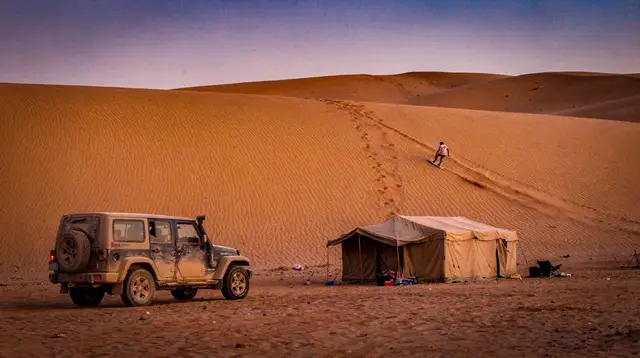
Wadi Al-Hitan: the valley of the whales
What is Wadi Al-Hitan and is it worth visiting from Cairo?
Wadi Al-Hitan is a desert site in the Fayoum region where the skeletons of extinct whales, some tens of millions of years old, sit exposed in the sand. It was inscribed as a UNESCO World Heritage Site in 2005 for its fossil record, a distinction the nearby lakes of Wadi El Rayan do not carry. It rewards travellers with a scientific or landscape interest more than a general sightseer looking for a quick photo stop.
What makes Wadi Al-Hitan different from the rest of Fayoum
Most day trips into the Fayoum desert are built around Wadi El Rayan, the lakes and waterfalls where visitors swim, ride quad bikes or watch the sunset over the dunes. Wadi Al-Hitan sits further into the desert, and it offers something else entirely: fossils. Scattered across a stretch of open sand are the skeletons of whales that swam here when this part of Egypt was seabed, tens of millions of years ago. Some of these skeletons still show vestigial hind limbs, a detail that makes the site one of the clearest physical records anywhere of whales evolving from land mammals into fully marine ones.
That scientific weight is why Wadi Al-Hitan, unlike Wadi El Rayan, is inscribed as a UNESCO World Heritage Site, added to the list in 2005. The lakes next door are a pleasant stop for scenery and a swim. Wadi Al-Hitan is the reason a palaeontologist would make the trip. Knowing that distinction before you go changes what you should expect: this is not a beach afternoon, it is a walk through open desert to look at bones that have been there since long before Egypt was a country.
What you actually see on site
The valley is not a museum in the conventional sense. A marked walking trail runs across the desert floor, with the more significant fossil skeletons left largely in place and protected by simple shelters or low barriers rather than glass cases. Interpretive panels along the route explain what each skeleton represents and roughly how old it is. Walking the full trail takes time and covers open, largely shadeless ground, so this is a visit that rewards a slow pace rather than a rushed stop between two other sights.
The setting itself is part of the appeal. Beyond the fossils, the desert here has its own eroded rock formations and a stark, quiet landscape that few visitors to Egypt see, since most itineraries stay close to the Nile Valley or the Giza plateau. For travellers with any interest in geology, natural history or simply desert landscapes away from crowds, the combination of the fossils and the setting is the actual draw, more than any single photograph.
Getting there from Cairo
Wadi Al-Hitan sits well into the Fayoum desert, reached from Cairo by a paved road as far as the Fayoum region, followed by a stretch of unpaved desert track for the final approach. Most visitors go with a private driver or on an organised desert and Fayoum excursion, since the unpaved section and the lack of clear signage make a rental car a poor choice for a first visit. Hiring a private driver for the day is the more common and more comfortable option than trying to self-drive.
Realism about timing matters more here than almost anywhere else on a Cairo-based itinerary. Getting out of Cairo itself adds time before the desert road even begins, since Cairo traffic is dense for most of the day, and mornings heading south-west out of the city are no exception. Once clear of the city, the desert road runs faster, but the final unpaved stretch to the fossil site slows things down again. Treat this as a full-day excursion from Cairo rather than a half-day add-on, and build in margin rather than assuming a fixed number of hours door to door.
Combining it with Wadi El Rayan
In practice, almost no one drives out to this stretch of desert only for Wadi Al-Hitan. Most operators pair it with Wadi El Rayan in a single desert and Fayoum excursion from Cairo, since the two sites sit within the same general area and share the same access road for much of the way. That pairing makes sense logistically, but it is worth separating the two in your expectations before you go.
Wadi El Rayan is the recreational stop: lakes, small waterfalls, a chance to swim or ride a quad bike across the dunes, and a scenic sunset if the timing works out. Wadi Al-Hitan is the scientific and landscape stop: a walking trail through open desert past fossil skeletons, with interpretive information rather than activities. If your interest leans toward an afternoon out in nature, Wadi El Rayan will likely be the highlight of the day. If your interest leans toward the fossils themselves and a quieter, less crowded stretch of desert, Wadi Al-Hitan is the reason to have booked the excursion in the first place. Knowing which one matters more to you helps set expectations for how much time to ask a driver or operator to spend at each stop.
The wider Fayoum region also holds Wadi El Rayan’s cascades and the potters of Tunis village, so a full day here can mix several different kinds of stops rather than just the desert and the fossils. Some multi-stop Fayoum oasis tours build in all three, though that makes for a longer day with less time at any single site.
Heat, timing and what to bring
Wadi Al-Hitan sits in open desert with almost no shade along the walking trail, which makes the timing of a visit more important than at most Cairo-area sights. October to April is the more comfortable stretch to plan a desert excursion, with cooler daytime temperatures that make walking the trail genuinely pleasant. Outside that window, particularly from June through August, desert heat regularly climbs past 35°C, and a shadeless walking trail in that heat is a different experience from the same walk in December. If you are visiting in summer, an early start is not optional; arriving as close to opening as the excursion allows is the only way to avoid the worst of the midday sun.
Spring brings its own consideration: the khamsin, sand-laden winds that can blow up between March and May, occasionally reduce visibility and comfort on exposed desert routes. Check conditions with your driver or operator if travelling in this window.
Practically, this means bottled water rather than tap water, sun protection, a hat, and closed shoes suited to sand and uneven rock rather than open sandals. There is little to no shade along most of the route, so pacing yourself and carrying enough water for the full walk matters more here than it would on a shorter, shaded site visit elsewhere in Egypt. Given the distance from Cairo and the exposed terrain, what to pack for Cairo is worth checking before a desert day specifically, since a standard city packing list will miss some of this.
Who this site is actually for
Being honest about audience matters more here than at most stops on a Cairo-based itinerary. Wadi Al-Hitan is not competing with the Giza pyramids, Islamic Cairo or the Egyptian Museum for a first-time visitor’s limited days. It has no pharaonic-era monuments, no grand architecture, and nothing that photographs the way a temple or a pyramid does. What it offers instead is a fossil record found in very few other places on earth, laid out in a genuinely striking desert setting.
That narrower appeal is exactly why it rewards a detour that most visitors skip. If natural history, evolutionary biology or desert landscapes interest you specifically, the trip is worth the drive and the heat. If your time in Egypt is limited to a handful of days built around Cairo, Giza and perhaps Luxor, Wadi Al-Hitan is a reasonable place to leave off the list in favour of sites closer to the city, or to fold into a longer, multi-stop desert day only if the fossils themselves are the draw rather than an afterthought.
For travellers building a longer, more varied Cairo stay, a multi-day desert-focused itinerary such as the Fayoum and White Desert five-day plan gives this kind of site room to breathe rather than compressing it into a single rushed afternoon. An extended multi-day Cairo itinerary that includes a full desert day works better for this site than a tight single-day loop that tries to fit in several other stops as well.
Booking a desert and fossil-focused excursion
Most operators sell Wadi Al-Hitan as part of a broader Fayoum or desert day rather than as a standalone booking, which suits the site’s remote setting. If your interest is specifically the fossils and the quieter, less-visited side of Egypt’s desert, an off-the-beaten-path desert excursion is worth looking at over a standard highlights tour, since general-interest itineraries can sometimes skip Wadi Al-Hitan in favour of Wadi El Rayan’s more crowd-pleasing lakes.
For travellers who have already covered the main Cairo and Giza sights and are looking for something that few other visitors bother with, a lesser-known sites excursion can be a good fit, since Wadi Al-Hitan is precisely the kind of site that stays off most itineraries by default rather than by any real lack of interest. Whichever route you book, confirm with the operator in advance whether the day includes both Wadi Al-Hitan and Wadi El Rayan, since the balance of time between the two varies by operator and matters more here than the price difference between listings.
As with any excursion booked from Cairo, treat published prices as a starting point rather than a fixed figure, and check the current rate and included stops on the booking page itself rather than relying on a number quoted elsewhere.
Wadi Al-Hitan versus Wadi El Rayan at a glance
| Wadi Al-Hitan | Wadi El Rayan | |
|---|---|---|
| Main draw | Fossilised whale skeletons | Lakes, waterfalls, dunes |
| UNESCO status | World Heritage Site (2005) | Not inscribed |
| Typical activity | Walking trail with interpretive panels | Swimming, quad bikes, sunset views |
| Shade on site | Very little | Some, near the water |
| Best suited to | Natural history and landscape interest | General sightseeing and recreation |
| Usual booking | Combined with Wadi El Rayan in a Fayoum day | Combined with Wadi Al-Hitan or Fayoum lakes tour |
Frequently asked questions about visiting Wadi Al-Hitan
What is Wadi Al-Hitan?
It is a remote stretch of desert in the Fayoum region of Egypt where the fossilised skeletons of early whales, some of the earliest known forms with vestigial hind limbs, lie preserved in the sand. The fossils date back tens of millions of years, from a period when this desert was seabed.
Why is Wadi Al-Hitan a UNESCO World Heritage Site?
Wadi Al-Hitan was inscribed by UNESCO in 2005 for the scientific value of its whale fossils, which document the evolution of whales from land-based ancestors to fully marine mammals. Wadi El Rayan, the lakes and waterfalls a short drive away, is not itself part of that inscription.
Can you visit Wadi Al-Hitan and Wadi El Rayan on the same day?
Yes, most operators combine both in a single desert and Fayoum excursion from Cairo, since they sit in the same stretch of desert. The two places serve different interests: Wadi El Rayan for the lakes, cascades and a swim stop, Wadi Al-Hitan for the fossils and the open desert setting.
How do you get to Wadi Al-Hitan from Cairo?
Wadi Al-Hitan sits deep in the Fayoum desert, reached by a paved road followed by a stretch of unpaved track, usually with a private driver or as part of an organised desert tour. Cairo traffic on the way out of the city adds to the overall time, so this is not a trip to plan around a short window.
What should you bring to Wadi Al-Hitan?
Bottled water, sun protection and closed shoes for walking on sand and rock are the basics. The site has almost no shade, and the desert heat builds quickly outside the cooler months, so timing the visit for the morning matters more than what you pack.
Is Wadi Al-Hitan worth the detour?
For travellers with an interest in natural history or desert landscapes, yes, precisely because relatively few visitors make the trip. It is not a site that competes with the pyramids or Islamic Cairo for a first-time itinerary, but it is one of the few places in Egypt where the appeal has nothing to do with the pharaonic era.
Is Wadi Al-Hitan open all year?
The site is accessible year-round, but summer months bring desert heat that is harder to manage on foot without shade. October to April is the more comfortable window, and even then an early start avoids the hottest part of the day.
Fayoum oasis and Wadi Rayan tours on GetYourGuide
Verified deep-linked GetYourGuide tours. Book through these links and we earn a small commission at no cost to you.
GetYourGuide does not provide a product photo for this activity — the image shows the meeting point, photographed by us.