Arabic phrases for Cairo: what you actually need
I went to Cairo expecting to need a lot more Arabic than I actually did. On my Giza pyramids tour, the Egyptologist guide spoke fluent English, switched into it for every question, and never once needed me to say a word of Arabic back. Same at the museums and on every organized excursion I booked. What surprised me was how much Arabic still came up everywhere else: with the driver between stops, at a fruit stand near my hotel, with the guy who waved me toward a parking spot and expected a coin for it. This page is about that gap — the Arabic you don’t need for the guided part of the day, and the small amount that actually helps for everything around it.
English covers more than I expected, but not everything
If your Cairo trip is mostly guided — a private driver picking you up at the hotel, an Egyptologist walking you through Islamic Cairo or Coptic Cairo, a felucca captain hired through a booking platform — English will carry almost the whole conversation. That’s true for museums, for day trips to Saqqara and Dahshur, and for most of what’s sold through GetYourGuide or Viator.
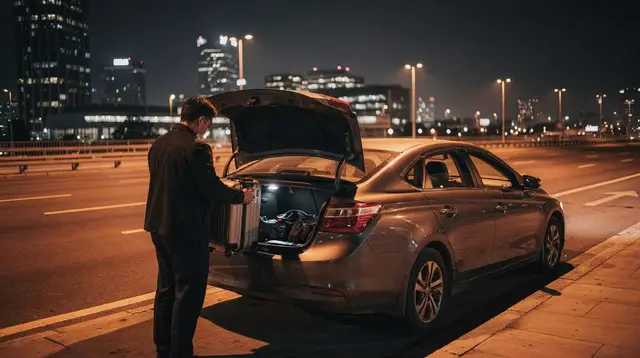
Where it thins out is the informal layer of the trip: a taxi you flag down yourself instead of ordering through Uber or Careem, a small restaurant with no English menu, a vendor at Khan el-Khalili who switches to Arabic the moment negotiating starts, or the doorman who opens a taxi door and expects a small tip for it. None of this requires fluency. It requires maybe ten words, used consistently.
The phrases that actually get used
A few Egyptian Arabic words cover most everyday situations. I’m giving rough phonetic spellings, not formal transliteration, because that’s closer to how they’re actually said in Cairo.
- Salam aleikum — hello, said on entering a shop or greeting someone first
- Shukran — thank you, the single most useful word on this whole list
- Aiwa / la — yes / no
- Min fadlak (to a man) / min fadlik (to a woman) — please
- Bikam? — how much, essential for anything not already priced
- Kteer — too much, said with a smile when a price needs negotiating
- Yalla — let’s go, used constantly by drivers and guides alike
- Mafeesh mushkila — no problem
- La, shukran — no thank you, the polite way to decline a persistent vendor without an argument
That’s close to the full list I actually used in a week. Numbers help too if you’re planning to shop — even just one through ten, spoken slowly, changes how a negotiation at Khan el-Khalili goes, because it signals you’re paying attention to the number rather than just nodding along. My guide to haggling in Cairo goes further into the actual back-and-forth; this page is only about the vocabulary that gets you there.
Where Arabic actually matters more than the guidebooks suggest
Drivers are the biggest case. Whether it’s an airport transfer or a private car for a day trip to Alexandria or Fayoum, a driver who doesn’t work primarily with tour companies may have limited English. A greeting, a thank-you, and being able to say a number back when discussing a fare cover almost every practical need. If you’re using Uber or Careem instead of hailing taxis, this matters less, since the destination is already set in the app.
Markets are the second case. Vendors at Khan el-Khalili deal with tourists all day and many speak workable English, but the negotiation itself often slides into Arabic numbers, half as a habit, half as a tactic. Recognizing a few and responding with your own keeps the exchange on equal footing rather than one-sided.
Smaller neighborhood restaurants, away from Zamalek or the big hotel districts, are the third. A menu might be in Arabic only, or a waiter might not have much English. Pointing, smiling, and saying shukran gets you surprisingly far, and I never had a meal go wrong over the language gap.
Baksheesh and the words around it
Baksheesh — the small tip given for a minor service — comes up constantly in Cairo: a bathroom attendant, someone who points out a good photo angle at the pyramids, a bag carried to a taxi. No Arabic phrase is required to hand it over; a small note and a nod does the job. But shukran said at the same moment reads as more genuine than silence, and it’s the one word I’d say is worth memorizing before anything else on this list, precisely because it applies to almost every one of these small exchanges. I go into how much is customary, without pinning it to a fixed figure, in the baksheesh and tipping guide.
What I wouldn’t bother learning
Full sentences, past or future tense, anything beyond these fixed phrases — none of it earned its place in a week-long trip. Egyptian Arabic pronunciation also differs enough from the Modern Standard Arabic taught in most language apps that spending time on formal grammar isn’t the efficient move here. What worked was repetition of the same nine or ten words across a hundred small interactions: greeting a shopkeeper, thanking a driver, declining a vendor at the bazaar, agreeing a fare. That’s a tourist’s Arabic, not a student’s, and it’s enough.
On the days I had a private guide, through something like a private Giza pyramids tour with a Bedouin village stop, or an Egyptian Museum guided visit, the language question mostly disappeared — the guide handled everything, in English, from entry queues to context on what we were seeing. It’s really the hours between bookings, getting from the hotel to Islamic Cairo or back from Coptic Cairo on your own, where these few words do the actual work.
a private Giza pyramids tour with a Bedouin village stop, guided in English throughoutFor the days you’d rather not test your Arabic on a driver at all, booking a guided car and Egyptologist removes the need entirely — worth it for at least one or two days of a first Cairo trip, even if you’re comfortable winging the rest with a handful of phrases. See a private, English-speaking Egyptian Museum tour or a guided visit to the museum of your choice for that option.
None of this replaces reading up on scams to watch for or Friday’s different rhythm in the city, and it’s not a substitute for the cultural context in pieces like Mamluk Cairo in five buildings or a short history of Coptic Cairo. It’s a narrower, more practical thing: the words that got repeated back to me the most, and the ones I’d tell a friend to actually write down before landing at Cairo airport.
Frequently asked questions about speaking Arabic in Cairo
Do I need to learn Arabic to visit Cairo?
No. Guides on organized tours and most hotel and museum staff speak English. A handful of Egyptian Arabic phrases still help with drivers, market vendors, and everyday moments outside the guided part of the day.
Is Egyptian Arabic the same as the Arabic taught in phrasebooks?
Often not. Many phrasebooks default to Modern Standard Arabic, which locals understand but rarely speak day to day. What gets used on the street and in taxis is Egyptian colloquial Arabic, which has its own pronunciation and shortcuts.
Will English be enough on a guided excursion?
Generally yes. Egyptologist guides and drivers booked through GetYourGuide or Viator typically work in English. Arabic becomes more useful outside those bookings, with independent taxi drivers, market stalls, and smaller restaurants.
What is baksheesh and do I need Arabic to handle it?
Baksheesh is the everyday tip given for a small service, such as a bag carried, a photo spot pointed out, or a bathroom attended. A short thank-you phrase in Arabic while handing it over is appreciated, but no specific phrase is required to give it.
Is it rude not to try any Arabic at all?
No, but a greeting or a thank-you in Arabic is noticed and tends to soften interactions, especially in markets or with drivers who deal with tourists all day.
Which two or three phrases matter most for a short trip?
A greeting, a thank-you, and a polite way to say no thanks when a vendor is persistent cover most situations. Numbers for haggling are useful if you plan to shop at Khan el-Khalili.
Does everyone in Cairo speak some English?
No. English is common among people who work with tourists, but far from universal among the wider population, including some taxi drivers and shopkeepers outside the main visitor areas.
tours.Culture
Verified deep-linked GetYourGuide tours. Book through these links and we earn a small commission at no cost to you.
GetYourGuide does not provide a product photo for this activity — the image shows the meeting point, photographed by us.