Things to do in Cairo
What's the best way to plan things to do in Cairo?
Split Cairo into a handful of zones — central Cairo and Zamalek, Islamic Cairo, Coptic Cairo — and treat each as its own half-day rather than trying to walk between them. Giza and the Grand Egyptian Museum sit outside the city and deserve a separate day.
Cairo doesn’t reveal itself from one hotel neighbourhood or one walking loop. It’s a megapolis of close to 20 million people spread across a flat, dense grid, cut by the Nile and stitched together by roads that are busy from mid-morning until well past midnight. Visitors who arrive expecting a compact old-town centre usually spend their first day recalibrating. This page is that recalibration: a mental map of how the city fits together and how to move through it, before you start booking specific sights.
Where the city actually breaks down
Central Cairo, on the east bank of the Nile, is the administrative and commercial core — wide 19th-century boulevards, Tahrir Square, government buildings, and the Egyptian Museum. Zamalek, an island in the middle of the Nile, is quieter and more residential, with tree-lined streets, cafes and a slower pace that makes it a popular base. Garden City, just south of Tahrir, is a smaller pocket of the same era, known for its winding colonial-era streets. Heliopolis, further northeast near Cairo International Airport (CAI), is a separate, self-contained district that some visitors pass through on arrival but rarely explore otherwise.
Then there are two historic enclaves that sit apart from this modern core and from each other: Islamic Cairo, the old medieval city with its mosques, madrasas and the Khan el-Khalili bazaar, and Coptic Cairo, a smaller, older pocket near Fustat with early Christian churches and the Coptic Museum. Both reward a dedicated visit rather than a drive-by, and both have their own detailed guides — things to do in Islamic Cairo and things to do in Coptic Cairo — because trying to cover either alongside central Cairo in the same afternoon usually means shortchanging both.
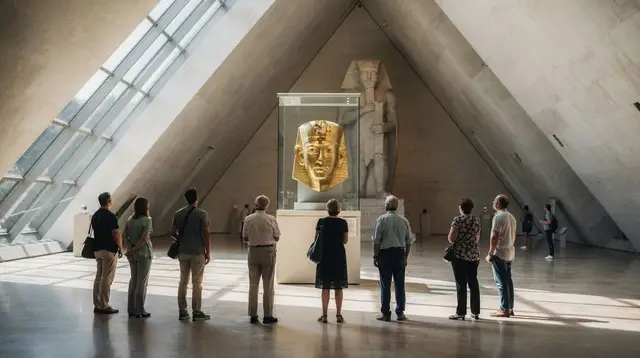
Giza, across the river to the west, is a different matter again. It’s where the pyramids of Khufu, Khafre and Menkaure, the Great Sphinx and the Grand Egyptian Museum sit, and it’s close enough to be a day trip from a central Cairo hotel, but far enough — and dense enough with things worth seeing — that it functions as its own outing. See things to do in Giza for that day on its own terms; this page treats the city and Giza as separate planning problems rather than one combined itinerary.
How many days this actually takes
A realistic split for a first visit looks something like this:
| Area | Suggested time | Pace |
|---|---|---|
| Central Cairo, Zamalek, Garden City | 1 day | Museum, Corniche, a felucca or dinner cruise |
| Islamic Cairo | 1 day | Citadel, Al-Azhar, Khan el-Khalili, on foot |
| Coptic Cairo | Half day | Compact area, walkable once there |
| Giza plateau and GEM | 1 full day | Separate outing, not combined with the above |
That’s two and a half to three days for the city itself, before Giza. Travellers with less time often try to compress Islamic Cairo and Coptic Cairo into one long day; it’s possible, but the transfer between them adds a real chunk of driving, and both areas are dense enough that rushing defeats the point. See how many days in Cairo for a longer discussion of trade-offs, and one day in Cairo or three days in Cairo for structured itineraries.
If you only have half a day in the city
Not every visitor gets the two and a half days above. For a single half-day slot squeezed between a Giza outing and a flight or an onward trip to Luxor, the honest arbitration is between the Egyptian Museum and a walk through Islamic Cairo’s core. The museum rewards a focused two hours and sits centrally, close to hotels in Downtown, Garden City and Zamalek, which keeps transfer time low.
Islamic Cairo asks for more time to feel worthwhile — the Citadel, Al-Azhar and Khan el-Khalili are spread across a larger area, and rushing it tends to mean seeing the bazaar and skipping the mosques, which misses the point of the district. Coptic Cairo is the hardest to justify in a half-day slot: it’s compact once you’re there, but the drive to and from Fustat eats a disproportionate share of a short window. If the choice comes down to one stop, the museum is the safer half-day pick for a first visit; Islamic Cairo is worth returning for on a trip with more time.
Getting around: the real arbitrage
This is the part most first-time visitors underestimate. Cairo’s traffic is dense for most of the day, not just at rush hour, and distances that look short on a map can take much longer in practice. Central Cairo to the Giza plateau, for instance, typically runs 45 to 90 minutes depending on the route and time of day — see Cairo traffic and realistic travel times for the fuller picture. Planning a day around three or four spread-out stops without accounting for this is the single most common way a Cairo day trip goes wrong.
Four ways to move around, each suited to a different kind of day:
The Cairo Metro has three lines and is fast, cheap and largely immune to surface traffic, but it only serves a fixed set of stations, so it works best for point-to-point trips that happen to line up with a line — central Cairo to Coptic Cairo (near Mar Girgis station) is a good example. See the Cairo metro guide.
Uber and Careem are both widely used and generally the easiest way to get a single ride at a fair, upfront price without negotiating. They’re a solid default for one-off trips between neighbourhoods. Details in Uber and Careem in Cairo.
A private driver is the norm for a day that strings together several stops — Islamic Cairo’s scattered sites, for instance, or a day that also needs airport transfers. Booking one ride-hail car per stop adds up in cost and in waiting time; a driver who stays with you removes both. See hiring a private driver in Cairo.
Walking works within a neighbourhood — Zamalek’s quieter streets, the Corniche, or once you’re inside Islamic Cairo’s old core — but not between neighbourhoods. Cairo’s blocks are long, pavements are inconsistent, and the heat for much of the year makes long walks between districts impractical. A short walk along the Nile is covered in Zamalek and the Nile Corniche on foot.
For anyone landing at Cairo International Airport (CAI) in Heliopolis, budget 60 to 90 minutes to reach a Zamalek or downtown hotel depending on traffic; see the Cairo airport arrival guide and Cairo airport transfers.
Timing a day around traffic and heat
Traffic in central Cairo builds through the morning and stays heavy into the evening, so the light window right after sunrise is the most reliable stretch for covering ground quickly — a taxi or private driver that takes 20 minutes at 7am can easily take 45 by 10am on the same route. The Egyptian Museum and Islamic Cairo’s mosques are also genuinely quieter before mid-morning, before both tour groups and midday heat arrive.
From June to August, when temperatures routinely pass 35°C, that early window matters even more: outdoor stretches like Khan el-Khalili’s alleys or a walk along the Citadel walls are far more comfortable before 10am or after 4pm than in between. Winter visitors, from October to April, have more flexibility, though the same traffic pattern still applies regardless of season. Friday mornings are unusually quiet across the city, since it’s the start of the weekend and many businesses open later; it’s a good slot for the Corniche or Zamalek, less useful for Islamic Cairo, where some sites keep reduced hours around Friday prayers.
The Nile: felucca and dinner cruises
One of the more unhurried things to do in Cairo doesn’t require a car, a driver, or a full day: a sunset felucca ride on the Nile. These traditional lateen-sail boats operate from a few fixed points along the Corniche, mostly near Zamalek and Garden City, and a ride typically runs an hour or so — enough to watch the city’s skyline change colour without committing an entire evening. Dinner cruises are a more structured, pricier alternative, usually with a set menu and a show; they suit visitors who want an evening built around one activity rather than a quick add-on between sightseeing. Both are covered in Nile felucca and dinner cruises in Cairo.
A day trip, not a walking tour, for pyramids and the museum
It’s worth repeating: Giza and the Grand Egyptian Museum are not part of a central Cairo day. They sit on the west bank, past the ring road, and the plateau alone — pyramids, Sphinx, and the GEM next door — is enough to fill a full day on its own. Trying to combine a morning at Giza with an afternoon in Islamic Cairo means two long transfers through the city’s worst traffic hours, and neither site benefits from being rushed. Book Giza as its own day; see things to do in Giza and Grand Egyptian Museum tours for what that day actually involves.
Food, evenings, and lower-key options
Cairo’s food scene is worth building time around rather than treating as a between-sights afterthought. Koshari, ful and taameya, and the city’s coffeehouse culture are as much a part of visiting as any monument — see Egyptian food to try in Cairo for a structured look, or Cairo evening shows and nightlife for what a Cairo evening can look like beyond a hotel restaurant. An unusual-angle guided outing, part food and part neighbourhood walk, is one way to cover ground in central Cairo without a rigid checklist.
What tends to surprise first-time visitors
Two things catch most newcomers off guard, and neither is a specific sight. The first is sheer noise and density at street level: near-constant car horns, informal pedestrian crossings, and traffic that doesn’t fully stop at any hour. It’s not dangerous, but it’s a level of sensory activity that’s worth expecting rather than discovering mid-jet-lag. The second is the persistence of vendors and unofficial guides near major sites, particularly around the Egyptian Museum, Khan el-Khalili and the approaches to the Citadel; a polite, firm decline works better than engaging, and it’s rarely worth the friction of arguing. Neither issue is specific to tourists — it’s simply how a dense, informal megacity operates — but both are easier to shrug off when they’re expected rather than treated as a bad sign about the trip.
A short, honest checklist before you book anything
- Don’t plan Islamic Cairo, Coptic Cairo and Giza as one day. Each deserves its own slot.
- Build in slack for traffic between any two stops that aren’t within walking distance of each other.
- Decide early whether a private driver is worth it for a multi-stop day — it usually is once you’re combining three or more sites.
- Treat a felucca sunset as a low-effort evening option, not something that needs its own reserved half-day.
- Keep central Cairo’s museum, Corniche and Zamalek together as one day; they sit close enough to combine comfortably.
- Front-load outdoor stretches to the early morning, especially between June and August.
Booking a first look at the city
an evening tour that covers central Cairo’s landmarks after dark is a practical way to get oriented on an arrival evening without committing daylight hours to it. For a slower, food-focused introduction to the neighbourhoods, a guided food tour through Cairo’s street food and local spots covers ground on foot with a local guide setting the pace. Visitors short on time sometimes prefer a tuk-tuk tour through Cairo’s older streets, which moves faster than walking without the overhead of arranging a private driver for a single outing. And for a first visit that wants to go beyond the obvious stops, a guided tour built around Cairo’s lesser-known corners is worth considering once the main landmarks are covered elsewhere in the trip.
Frequently asked questions about things to do in Cairo
How many days do I need for things to do in Cairo?
Two to three full days covers central Cairo, Islamic Cairo and Coptic Cairo at a reasonable pace, without rushing. That’s separate from a dedicated day for Giza and the GEM.
Is Cairo walkable?
Parts of it are. Zamalek and the Corniche work on foot, and Islamic Cairo’s old core is best explored on foot once you’re there. But the city as a whole is too large and too car-oriented to walk between neighbourhoods.
Should I use the metro, Uber, Careem, or a private driver in Cairo?
The metro is fast and cheap for a handful of fixed routes. Uber and Careem work well for point-to-point trips in traffic. A private driver makes sense for a day that strings together several stops, since waiting and re-booking a ride at each one adds up.
Are Giza and the pyramids included in a Cairo city day?
No. Giza sits west of the Nile and is usually treated as its own outing with the Grand Egyptian Museum, not squeezed into a central Cairo itinerary.
What’s the difference between Islamic Cairo and Coptic Cairo?
Islamic Cairo is the old medieval city of mosques, the Citadel and Khan el-Khalili bazaar. Coptic Cairo is a smaller, older enclave near Fustat with early Christian churches and the Coptic Museum. They’re in different parts of the city and each merits its own visit.
Is a felucca ride worth doing in Cairo?
A sunset felucca on the Nile is one of the few low-key, unhurried things to do in Cairo, and it doesn’t require a full day or a car. Dinner cruises are a more structured, pricier alternative with a show.
How bad is Cairo traffic really?
Dense for most of the day, not just at rush hour. Trips that look short on a map routinely take much longer in practice, so it’s worth building slack into any plan that involves more than one or two stops.
What time of day is best for sightseeing in central Cairo?
Early morning, before roughly 10am, when traffic is lighter and the Egyptian Museum and Islamic Cairo’s mosques are quieter. Midday in summer is worth avoiding outdoors entirely; late afternoon works for the Corniche and Zamalek once the heat breaks.
What surprises first-time visitors most about Cairo?
The noise and density more than any single sight — car horns, informal crossings, and constant activity at street level. Persistent vendors near major sites are common and best handled with a polite, firm no rather than engaging.
Cairo trip planning and itinerary tours on GetYourGuide
Verified deep-linked GetYourGuide tours. Book through these links and we earn a small commission at no cost to you.
GetYourGuide does not provide a product photo for this activity — the image shows the meeting point, photographed by us.