Quad biking in the desert around the Giza pyramids
What is a Giza desert quad bike tour actually like?
It's a guided ride on the sand dunes behind the Giza plateau, with the pyramids visible in the distance rather than up close. It's sold as an adventure activity, not a monument tour, and it works best paired with a separate visit to the plateau itself.
A different outing from the pyramids visit itself
If you’ve been reading about Giza mainly through the lens of the pyramids themselves — Khufu, Khafre, the Great Sphinx, the new Grand Egyptian Museum (GEM) — this page is about something else entirely. Behind and around the plateau, the desert opens up into dunes and flat sandy tracks, and a small industry of local operators runs guided quad bike rides through it. This is an adventure activity, not a history lesson, and it’s worth being clear about that distinction before you book.
Nobody comes back from a quad bike ride at Giza able to tell you much about the Old Kingdom. What they come back with is a decent adrenaline hit, sand in their shoes, and photos of the pyramids sitting on the horizon while they were riding. That’s the whole pitch, and it’s a fair one — as long as you know that’s what you’re buying.
What the ride actually involves
A typical outing starts at a stable or desert camp on the edge of the urban area, a short drive from central Giza hotels. After a safety briefing and a helmet fitting, a guide leads a small convoy of single-rider quads out onto marked desert tracks. The terrain is mostly open sand, with some firmer flat stretches and the odd rise and dip that gives the ride its bounce. Speeds vary by operator and by how the group is riding — some sections are a gentle cruise, others let more confident riders open the throttle.
The pyramids themselves are visible for much of the ride, usually as a backdrop rather than a close subject. You’re not riding up to the base of the Great Pyramid on a quad bike — the plateau itself is a ticketed archaeological site with its own access rules, and the desert route stays outside it. What you get instead is a wide-open view: the built-up edge of Cairo on one side, dunes on the other, and the pyramids sitting in between at a distance that makes for a striking photo but not a close inspection.
Rides typically run somewhere in the range of thirty minutes to an hour of actual riding time, sometimes bundled with a stop for photos, a short camel ride, or a drink at the camp before or after. Exact duration and inclusions vary by listing, so check what a specific tour covers rather than assuming.
a desert quad bike ride at Giza with an optional camel add-on is the most straightforward version of this — a dedicated adventure slot rather than a stop bolted onto a sightseeing itinerary.
Daytime rides versus sunset departures
Timing changes the experience more than almost anything else about this activity. A daytime ride, especially outside the cooler October–April months, means direct sun and heat on an already dusty, physical activity — fine in winter, tougher in summer, when temperatures regularly clear 35°C and the sensible move for any outdoor activity is to go early or late rather than at midday.
A sunset departure is the more popular choice for a reason: the light softens, the heat drops, and the pyramids in silhouette against an orange sky make for a genuinely good photo, better than most midday shots. The trade-off is that sunset slots fill first and the ride itself happens in fading light, so if you want maximum riding time rather than maximum atmosphere, an earlier slot may serve you better.
Neither is objectively correct — it depends whether you’re prioritising comfort and photos or a longer, cooler-headed ride with better visibility of the terrain.
Camel add-ons and combined itineraries
Quad biking and camel riding get bundled together often enough at Giza that it’s worth being clear they’re two different activities on two different animals — or machines. A quad bike ride covers more ground faster and is the more physical, adventure-sport end of things; a camel ride is slower, calmer, and closer to a photo-op than a workout. Some tours offer both in one package, with the quad segment first and a short camel stretch afterward, often as an optional add-on rather than something baked into every booking.
a combined pyramids visit with quad bike safari and camel ride pairs the desert ride with time at the plateau itself, which suits anyone who wants both the adventure activity and the monument visit in a single day rather than splitting them across two outings. If you’d rather understand the difference between the animal-led options before booking either, the comparison on camel versus horse versus quad at Giza breaks down pace, comfort, and what each one is actually good for.
For travellers who want an aerial view instead of a ground-level dune ride, a paramotor flight over the pyramids is the other adventure option at Giza worth knowing about, though it’s a different kind of activity entirely — airborne rather than off-road, and considerably more expensive as a rule. a paramotor flight over the Giza pyramids is worth a look if height rather than sand is the thrill you’re after.
Who this suits — and who it doesn’t
This activity suits travellers who want a physical, slightly rough-and-ready couple of hours in the desert and don’t mind that it has nothing to do with ancient history. It works well as a add-on to a longer Cairo trip, a way to fill a free afternoon or evening, or a change of pace after a few days of museums and mosques. Families with older kids or teenagers who’d rather be doing something than looking at something tend to enjoy it; so do travellers on a layover with a few free hours who want one memorable thing to do rather than a full sightseeing day — see the layover tours guide if that’s your situation.
It suits less well anyone expecting a close encounter with the pyramids themselves, anyone with back or joint problems who should avoid a bouncy ride over uneven sand, and very young children, for whom most operators set a minimum age or require a shared seat with an adult. If understanding the monuments is the actual goal, a guided visit to the plateau — covered separately in the Giza pyramids tours guide and the self-guided plateau guide — is the page to read, not this one. Anyone travelling with a wheelchair user or someone with limited mobility should also check the Giza pyramids accessibility guide: quad biking itself is not an accessible activity in the way a plateau visit with a private vehicle can be arranged to be.
Practical realities: safety, gear, and fitness
Desert quad biking is a genuine adventure-sport activity, not a theme-park ride, and it’s worth treating it that way. Reputable operators run a briefing before setting off, fit helmets, and keep a guide at the front of the group to set the pace and route — never rent a quad without one. The desert surface is uneven: soft sand in places, firmer ridges in others, with dips that can catch an inexperienced rider off guard. Staying within the group’s pace rather than racing ahead is the single most useful piece of advice for a first-timer.
Wear closed shoes and trousers rather than sandals and shorts — dust and sand kick up constantly, and a fall onto bare skin stings more than it needs to. Sunglasses or riding goggles cut down on blown grit, and a light scarf or buff over the nose and mouth is genuinely useful, especially if khamsin winds are blowing, which happens most often between March and May. Sun protection matters year-round given how little shade the desert offers, and in summer months an early morning or evening slot is the more comfortable choice regardless of what the tour brochure suggests.
Anyone with a heart condition, a back injury, or who is pregnant should sit this one out — most operators will say so outright, and it’s sound advice regardless. Basic fitness is enough for the ride itself; no prior quad bike experience is assumed.
Getting to the start point
Most quad bike operators are based on the edge of Giza, close enough to pyramid-view hotels that transfer times are short — often well under the 45–90 minutes that a trip between central Cairo and the plateau usually takes, since the desert camps sit right at the edge of the built-up area rather than requiring a crossing of the city. If you’re coming from a hotel in central Cairo, Zamalek, or Heliopolis rather than staying in Giza itself, factor in Cairo’s traffic, which stays heavy for most of the day; the Cairo traffic and realistic travel times guide is worth a read before setting expectations. A private driver, arranged through your hotel or booked directly, is the normal way to reach the start point — see hiring a private driver in Cairo for how that usually works. Most quad bike tours include hotel pickup and drop-off as standard, which removes the transfer question entirely.
Choosing a tour
The main decision is less about which operator and more about what you want bundled in: a standalone quad ride, a ride with an optional camel add-on, or a fuller half-day that folds in the pyramids and museum visit as well. a package combining pyramids tickets with a quad bike adventure suits anyone who’d rather book the sightseeing and the adrenaline activity together in one go, with one pickup and one guide, instead of arranging them separately. If your priority is the desert ride specifically and you’d rather keep the plateau visit as its own unhurried trip on a different day or earlier the same morning, a standalone quad tour is the simpler booking.
Whichever you choose, check the listing for what’s actually included — group size, ride duration, whether a helmet and water are provided, and whether the camel segment (if offered) is optional or built in — rather than assuming based on the title alone. Prices and exact durations vary by operator and season, so treat the booking page as the source for current details rather than any fixed number here.
Giza desert quad bike tours: your questions answered
Is a quad bike tour around the Giza pyramids worth it?
It depends what you’re after. As a short, physical desert ride with the pyramids as a backdrop, it delivers. As a way to learn about or get close to the monuments, it doesn’t — that’s a separate visit.
How close do the quad bikes get to the pyramids?
Routes run in the open desert behind and around the plateau, not through the ticketed archaeological site. The pyramids stay in view at a distance rather than as a close-up stop.
Is quad biking at Giza safe?
Reputable operators give a safety briefing, a helmet, and a lead guide who sets the pace. Ride within your ability, keep both hands on the bars where instructed, and treat the desert surface as unpredictable, with soft sand and sudden dips.
What should I wear for a desert quad bike ride at Giza?
Closed shoes, trousers rather than shorts, and something you don’t mind getting dusty. Sunglasses or goggles help against blown sand, and a scarf or buff to cover your nose and mouth is genuinely useful.
Can beginners ride a quad bike at Giza?
Most tours are built for first-timers, with a briefing and a slow opening stretch before the pace picks up. Some operators offer a shared or tandem option for anyone who’d rather not drive solo.
Is a sunset quad bike tour better than a daytime one?
Sunset rides trade daytime heat for softer light and cooler air, and many riders prefer them for that reason. A daytime slot works better if you want to combine the ride with other stops the same day.
Do quad bike tours include entry to the pyramids themselves?
Not usually. The desert ride and a ticketed visit to the Giza plateau are typically separate things, sold either as add-ons in the same package or as two different bookings.
Are camel rides included with quad bike tours?
Some packages bundle a short camel ride alongside the quad biking, often as an optional add-on rather than a fixed inclusion. Check what a specific listing covers before booking if a camel stop matters to you.
Desert quad bike and buggy tours on GetYourGuide
Verified deep-linked GetYourGuide tours. Book through these links and we earn a small commission at no cost to you.
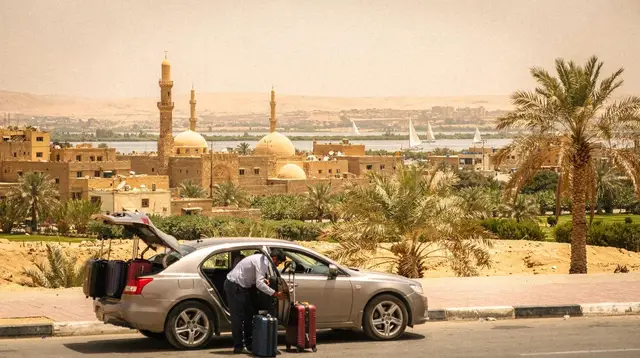
GetYourGuide does not provide a product photo for this activity — the image shows the meeting point, photographed by us.