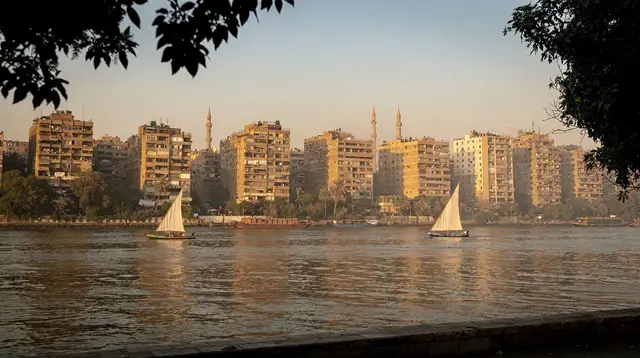
Cairo for history lovers: where to start beyond the pyramids
Why I stopped starting with Giza
Every first-time visitor asks me the same thing: which day do we do the pyramids. Fair enough, they’re the reason most people book a flight. But if what actually pulls you to Egypt is history rather than a single photo, I think Giza is the wrong place to start. It’s one site, however extraordinary, and it tells you almost nothing about the seventy centuries of Cairo that came after it. The city itself is the bigger story, and it lives in two neighbourhoods that most rushed itineraries skip or squeeze into an afternoon: Islamic Cairo and Coptic Cairo.
I now tell people to give these two districts a full day between them, ideally two separate mornings so the heat and the crowds don’t wear you down, and to treat Giza as its own trip on a different day. That’s not a purist’s opinion, it’s practical. Both districts reward slow walking, and both involve entering active places of worship, which means dress and pacing matter more than they do at an open-air archaeological site.
Day one: Islamic Cairo
I usually start at the Citadel of Saladin, which sits on high ground and gives you a first real view over the old city before you get lost in its alleys. The Mosque of Muhammad Ali inside the Citadel walls is the one everyone photographs, with its grey stone domes, but it’s a nineteenth-century building, not medieval, and I say that only because guests are often surprised to learn how young it is compared to what comes next.
From the Citadel, I head down toward Al-Azhar, founded in 970 and still functioning as one of the most significant centres of Islamic learning anywhere. Walking in after the Citadel gives you a sense of scale: this mosque predates the Crusades by over a century. A short walk away is the Mosque of Sultan Hassan, which I find more architecturally striking than either of the other two, a fourteenth-century Mamluk building with a soaring entrance portal that photographs badly and impresses in person.
Between the mosques, Al-Muizz Street is where the walking becomes the point rather than a means of getting somewhere. It’s a corridor of Mamluk and Ottoman facades, working shops, and food stalls that hasn’t been cleared for tourism the way some old quarters elsewhere have. It spills naturally into Khan el-Khalili, the bazaar most visitors have heard of. I’d treat the bazaar as the last stop of the day rather than the destination, since it’s easy to spend an hour bargaining over a lamp and lose the light for everything else. If you want a sense of what a fair price looks like before you start, our haggling guide is worth five minutes before you go.
Dress matters here even outside the mosques proper: cover shoulders and knees, and inside any mosque you’ll remove your shoes and women will cover their hair. Nobody will stop you at the bazaar entrance, but it makes the mosque visits smoother if you’re already dressed for them.
a guided walk through Old Cairo covering the street life, history and food stalls in one route, which I’d recommend if you’d rather have someone explain what you’re looking at than piece it together from plaques.
Day two: Coptic Cairo
Coptic Cairo sits a few kilometres south, near Fustat, and it’s a different register entirely: quieter, more contained, and centred on the Hanging Church, suspended over the gatehouse of a Roman fortress and one of the oldest churches in Egypt. Next to it, the Ben Ezra Synagogue is a smaller, quieter stop, notable for the medieval documents once stored in its genizah, and worth the short walk even if synagogues aren’t usually on your list.
The Coptic Museum rounds this out with textiles, manuscripts and stonework that trace Christian Egypt from the Roman period through the early Islamic centuries. It’s a small museum compared to what’s coming next in this piece, and I think that’s its strength: you can do it properly in an hour without the fatigue that hits at larger collections.
Dress the same way you would for the mosques: shoulders and knees covered, and expect to remove shoes in parts of the older buildings.
a Coptic Cairo tour built around the churches, the museum and the neighbourhood’s history if you want the context filled in as you walk, which I found useful the first time I did this route on my own and kept guessing at dates.
The museum confusion I keep having to clear up
This is the part I get asked about most, so let me be direct about it. The Egyptian Museum on Tahrir Square opened in 1902 and it has not closed. I still meet travellers who assume that once the Grand Egyptian Museum (GEM) opened near Giza, the old museum on Tahrir would shut its doors. It hasn’t, and there’s no announced plan for that. The two coexist, and each holds a substantial collection in its own right, so you can visit both without one making the other redundant.
What did move is the royal mummies. Since the Golden Parade of April 2021, Egypt’s royal mummies are displayed at the National Museum of Egyptian Civilization (NMEC) in Fustat, close to Coptic Cairo, not at Tahrir. If a mummy hall is what you’re after, Tahrir won’t have it. NMEC will, and pairing it with your Coptic Cairo morning makes geographic sense since they’re a short taxi ride apart. See our comparison of the GEM against the Tahrir museum if you’re trying to decide how to split a limited number of museum hours, though for this history-focused route I’d say: Tahrir or NMEC on a Coptic Cairo day, GEM on your separate Giza day.
A rough two-day shape
| Day | Morning | Afternoon | Note |
|---|---|---|---|
| Islamic Cairo | Citadel of Saladin, Al-Azhar | Al-Muizz Street, Sultan Hassan, Khan el-Khalili | Cover shoulders and knees; remove shoes in mosques |
| Coptic Cairo | Hanging Church, Ben Ezra Synagogue | Coptic Museum, NMEC (royal mummies) | Same dress code; NMEC and Coptic Cairo sit close together |
I’d keep Giza and the GEM off this table entirely. They’re a full day on their own, described in our things to do in Giza guide, and trying to bolt them onto either of these two days just means rushing through the mosques or the churches to make it across town before the traffic gets worse, which in Cairo is most of the day.
Practical notes for both days
Neither district is a place to rush. The alleys around Al-Muizz Street and the lanes of Coptic Cairo are narrow and uneven, so comfortable shoes matter more than they would at a paved museum. Bring cash in Egyptian pounds for small entrance fees, tips and bazaar purchases; cards work in fewer places here than in a hotel or mall. Friday is the weekly day of rest and mosque visiting hours shift, so I’d avoid a Friday morning for the Islamic Cairo route specifically. During Ramadan, expect shorter opening windows across both districts and a livelier, later evening atmosphere around Al-Muizz Street once the fast breaks.
FAQ: history-focused Cairo, Islamic and Coptic Cairo
Has the Egyptian Museum on Tahrir Square closed now that the GEM is open?
No. The Egyptian Museum on Tahrir Square, open since 1902, continues to operate alongside the Grand Egyptian Museum near Giza. Both hold substantial collections and neither has announced a closure.
Where are Egypt’s royal mummies displayed?
At the National Museum of Egyptian Civilization (NMEC) in Fustat, since the Golden Parade of April 2021. They are not on display at the Egyptian Museum on Tahrir Square.
How many days should I set aside for Islamic and Coptic Cairo?
I’d budget a full day for each, so two days total, rather than combining both into one rushed day. Each district involves slow walking and multiple stops inside active places of worship.
What should I wear inside the mosques and churches?
Shoulders and knees covered for everyone, with women also covering their hair inside mosques. Expect to remove your shoes at several of these sites.
Is Al-Azhar Mosque still an active place of worship and study?
Yes. Founded in 970, it remains a functioning mosque and one of the most significant centres of Islamic learning, so visits should be timed and conducted respectfully around prayer times.
Can I combine Islamic Cairo or Coptic Cairo with the pyramids in one day?
I wouldn’t recommend it. Cairo’s traffic is heavy through most of the day, and each district already deserves a full morning to afternoon on its own. Treat Giza as a separate day.
Is Khan el-Khalili worth visiting if I’m not interested in shopping?
Yes, mainly for the walk itself and the surrounding streets, which flow directly from Al-Muizz Street. I’d still treat it as the last stop of an Islamic Cairo day rather than the main event.
Are Coptic Cairo and the NMEC close enough to visit together?
Yes, they sit close to each other near Fustat, which is why I pair a Coptic Cairo morning with an NMEC stop for the royal mummies rather than treating them as separate outings.
tours.Inspiration
Verified deep-linked GetYourGuide tours. Book through these links and we earn a small commission at no cost to you.
GetYourGuide does not provide a product photo for this activity — the image shows the meeting point, photographed by us.